Zcash Founder on Privacy, AI, and How ZEC Can Become “Encrypted Bitcoin”
Zcash Founder on Privacy, AI, and How ZEC Can Become “Encrypted Bitcoin”
More than a decade after crypto’s birth, we’re standing at a quiet but decisive crossroads.
On one side, institutional capital and mainstream distribution keep accelerating—ETFs, regulated exchanges, and custody infrastructure have pulled crypto deeper into the global financial system. On the other, the original cypherpunk promise—permissionless money with meaningful privacy—struggles against a familiar trio: regulatory pressure, surveillance incentives, and user experience friction.
In a recent Bankless conversation, Zcash founder Zooko Wilcox-O’Hearn argues that privacy is no longer a “nice-to-have,” but is back on the critical path—especially in an era where AI turns blockchain surveillance into pattern recognition at scale. You can find the episode here: Zcash Founder on Privacy, AI, and How ZEC is “Encrypted Bitcoin” (Bankless).
This article unpacks the key ideas behind that discussion—and connects them to what crypto users actually care about in 2026: self-custody, compliance risk, usability, and the future of private value.
1) Why privacy becomes urgent when AI meets public blockchains
Blockchains are transparent by design. That transparency is powerful for verifiability—but it also creates an always-growing dataset of financial behavior: counterparties, timing patterns, spending clusters, and inferred identity links.
What changes with AI is not the existence of surveillance, but its scalability and accuracy:
- Labeling becomes cheaper: machine learning reduces the cost of mapping addresses to entities.
- Pattern detection gets stronger: models can infer relationships even when users “try to be careful.”
- Errors become durable: once an address cluster is labeled, the stigma (and downstream risk) can persist.
This matters because privacy isn’t only about hiding wrongdoing. It’s about normal commercial confidentiality and personal safety—the same reasons you don’t publish your salary, rent, or bank balance on a public website.
In parallel, regulation is hardening around the world. In the EU, for example, MiCA has been rolling into force with major milestones in June 2024 and December 2024, plus transitional periods extending into July 2026 for some providers. See: European Banking Authority overview on MiCA timelines.
Meanwhile, in the US, regulators have explicitly targeted “mixing” activity as a major AML focus area (even beyond any single protocol), as reflected in FinCEN’s approach to convertible virtual currency mixing: FinCEN notice on CVC mixing.
The practical takeaway: as AI-driven analysis improves and compliance expectations rise, the “default public ledger” model becomes less neutral. Privacy increasingly becomes a prerequisite for everyday financial autonomy—not an edge case.
2) The case for ZEC as “Encrypted Bitcoin”
Zooko’s “encrypted Bitcoin” framing is provocative because it targets a simple meme: Bitcoin is digital gold; ZEC aims to be digital gold with encryption.
At a high level, Zcash keeps several “Bitcoin-like” properties that users intuitively understand:
- Hard cap monetary policy (21 million supply)
- Proof-of-Work heritage and security assumptions
- A focus on being money first, not an application platform
Where Zcash diverges is what gets revealed on-chain. Zcash supports both transparent and shielded transfers, but its long-term vision is to make “private by default” feel normal—so privacy is not a specialized tool, but standard money behavior.
If you want the canonical technical reference, start here: Zcash Protocol Specification.
“Encrypted” doesn’t mean “unverifiable”
A common misunderstanding is that privacy coins “turn off” accountability. Zcash’s approach uses zero-knowledge proofs so the network can still verify correctness (no inflation, valid spends) without revealing sensitive details.
That design goal—verifiability without visibility—is exactly why Zcash is often discussed alongside the broader zero-knowledge movement.
3) The real bottleneck: UX, not cryptography
Privacy tech has existed for years. The problem is that most users don’t adopt tools that feel fragile, slow, or easy to mess up.
In the Bankless discussion, the theme is clear: cypherpunk tools didn’t “fail” because the math was wrong—they failed because onboarding was too hard.
For privacy to win, the experience must become:
- Default (users shouldn’t need a PhD to avoid address reuse)
- Fast (mobile-first performance matters)
- Composable (usable with swaps, payments, and normal wallet flows)
Zcash ecosystem efforts increasingly reflect that product mindset. Zcash’s public upgrade history also signals sustained iteration and shipping cadence:
- NU6 activated on November 23, 2024: Zcash NU6
- NU6.1 activated on November 24, 2025: Zcash NU6.1
And the roadmap focus has leaned heavily into making privacy usable, not just possible. See: Electric Coin Co. roadmap (updated Oct 31, 2025).
4) Governance and the “dev fund” question: sustainability vs purity
No serious privacy system survives without constant engineering: wallet SDKs, light clients, proof systems, audits, and protocol upgrades.
That reality creates a tension:
- Cypherpunks prefer minimal governance and minimal funding structures.
- Long-lived infrastructure needs sustainable resourcing.
Zcash’s development funding mechanisms have been debated for years, but the key point from the conversation is pragmatic: funding wasn’t just a political detail—it was a survival mechanism. Protocols with no budget often quietly decay, even if the ideals remain pure.
For readers tracking how network upgrades connected to funding streams and consensus rules, a helpful starting point is the NU6 release context: ECC: zcashd 6.0.0 and NU6 deployment.
5) “Value at rest” vs “value in flight”: a more realistic privacy north star
A useful mental model raised in the discussion is that privacy is not only about hiding transfers (“in flight”), but about protecting holdings (“at rest”).
Why that matters:
- People can accept that some transactions need to be visible (accounting, taxes, regulated ramps).
- But almost no one wants their entire net worth and spending graph permanently indexed.
If ZEC is to earn the “encrypted Bitcoin” narrative, it likely won’t be by promising total invisibility everywhere. It will be by delivering something closer to:
store-of-value credibility + optionality + normal usability.
In other words, Zcash doesn’t need everyone to become a privacy maximalist. It needs privacy to feel like the default safety standard—similar to how HTTPS became normal on the web.
6) What users should watch in 2026: privacy, compliance, and operational security
If you’re a user (not a protocol engineer), here are the questions that increasingly matter:
A. Can you actually use shielded privacy in real life?
- Does your wallet support shielded flows reliably?
- Are fees, performance, and recovery UX acceptable?
- Do common actions (receive, send, swap) leak metadata?
B. Are you prepared for stricter compliance environments?
Even if you never touch anything illicit, privacy tooling can create false positives or additional scrutiny in some contexts. The direction of travel is clear: more monitoring, more reporting, and more pressure on service providers (especially in heavily regulated regions). A starting point for EU context is the official Commission timeline notes around MiCA and DORA: European Commission digital finance update.
C. Are your keys protected from the “AI era” threat model?
AI won’t just analyze chains—it will also amplify phishing, deepfake social engineering, and malware targeting high-value wallets. For long-term holdings, operational security remains non-negotiable.
This is where self-custody discipline matters more than ideology: segmented wallets, minimal approvals, careful address management, and offline key protection.
7) Where OneKey fits (when privacy becomes a default expectation)
If “encrypted Bitcoin” is the direction, then the user stack needs to mature: private-by-default UX on the software side, and hardened key management on the custody side.
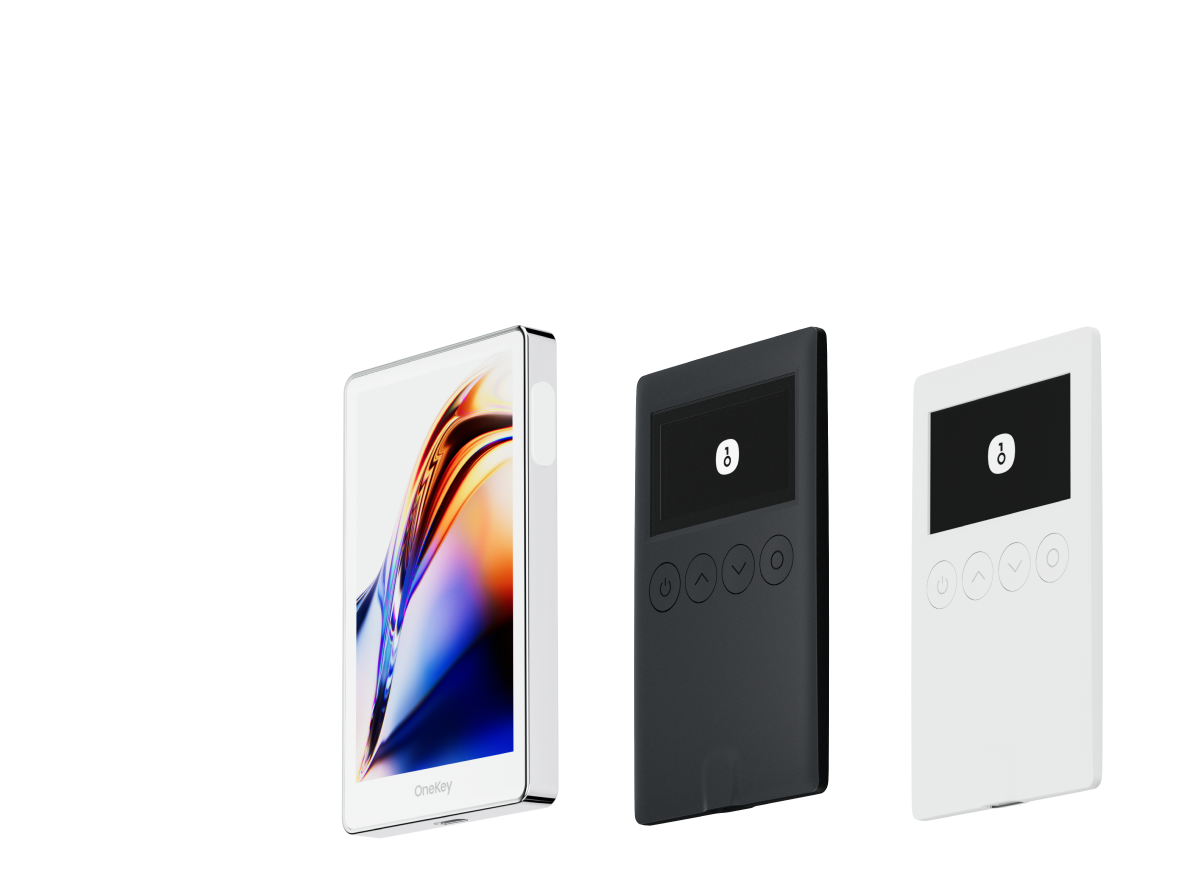
A hardware wallet like OneKey can be a practical part of that story because it emphasizes:
- Offline key isolation (signing without exposing private keys to an internet-connected device)
- Open-source verifiability (important for users who care about trust minimization)
- A security model aligned with long-term holding—especially when AI-driven phishing and malware are getting better
In short: if privacy is becoming table stakes, then secure self-custody becomes the foundation it rests on.
Closing thoughts
The cypherpunk dream didn’t disappear—it got outpaced by UX debt and overwhelmed by surveillance economics. Zooko’s argument is that AI changes the equation: it turns passive transparency into active monitoring, pushing privacy back into the “must-have” category.
ZEC becoming “encrypted Bitcoin” isn’t guaranteed. But the narrative is coherent: a Bitcoin-like monetary meme, reinforced by modern cryptography, delivered through product-grade usability.
And in 2026, that combination—privacy, usability, and security—may be the only credible path for crypto to serve real people at global scale.