XAN Token Overview: The Next Frontier of Privacy and DeFi


Key Takeaways
• Privacy is essential in DeFi to protect users from surveillance and data leaks.
• XAN enables private transactions while maintaining compliance through attestations.
• The token's design focuses on modular scalability and account abstraction for better user experience.
• XAN's utility includes private payments, confidential DeFi positions, and governance with privacy-preserving voting.
• Adoption will depend on practical integrations with existing DeFi protocols and services.
Privacy is moving from a niche ideal to a core requirement across crypto. As regulators sharpen guidance and users demand stronger data protection, the next generation of decentralized finance will be built on privacy-preserving primitives. Positioned at this intersection, the XAN Token aims to bridge private transactions with composable DeFi, offering a design that balances confidentiality, compliance, and usability.
Why Privacy Matters in DeFi Today
Open ledgers are transparent by design, but transparency can expose users to surveillance, front‑running, and core business data leaks. Privacy primitives such as zero‑knowledge proofs enable selective disclosure and confidential settlement while preserving verifiability. For a concise overview of how zero‑knowledge proofs work and why they matter to scalability and privacy, see the Ethereum Foundation’s primer on zero‑knowledge proofs (zk). Read more.
Modern privacy must also align with evolving regulation. The EU’s MiCA framework codifies requirements for crypto issuance and service providers across the bloc, setting clearer standards for disclosures and risk controls. Regulation text. Globally, the Financial Action Task Force advances Travel Rule guidance for virtual assets and VASPs, emphasizing traceability of value transfers. Guidance overview. The lesson from enforcement actions on mixing services is straightforward: privacy must be designed with compliance pathways and auditable mechanisms. OFAC press release on Tornado Cash.
What Is XAN?
XAN is envisioned as a privacy‑first asset that retains DeFi composability. Rather than a “black box,” it proposes a model where confidential transfers and private balances are enabled, while users or applications can produce attestations when needed. That means:
- Private settlement using zk proofs, with publicly verifiable correctness.
- Optional disclosure through off‑chain attestations or on‑chain proof mechanisms.
- Compatibility with mainstream DeFi rails, leveraging standard token interfaces.
Architecturally, XAN would align with emerging privacy‑rollup designs that keep core state opaque yet allow proof‑based interactions with other chains and applications. See Aztec’s hybrid approach to private state and public settlement for a reference design. Aztec documentation.
Key Design Pillars
-
Privacy by Default, Disclosure on Demand
Privacy is the baseline for transfers. When compliance or auditability is required, users can generate proof‑based attestations that reveal minimal necessary information. For perspective on selective disclosure and compliance‑aware designs, see discussions around stealth addresses and privacy pools. Stealth addresses explained. -
Account Abstraction and UX
To make privacy practical, wallets can adopt account abstraction (EIP‑4337) for gas sponsorship, programmable signing, and session keys. This reduces friction for private transactions and dApp interactions. EIP‑4337. -
Modular Scalability
Private computation is heavy. Pairing a privacy layer with modular data availability networks can minimize costs while maintaining integrity. Celestia’s data availability model is a good example of modular architecture supporting scalable rollups. Celestia docs. -
Restaking for Security
Economic security can be bootstrapped via restaking, where XAN’s privacy layer benefits from shared validator sets and incentive structures. For context on how restaking extends security to new services, see EigenLayer. EigenLayer docs.
Token Utility
A privacy‑first token must do more than enable transfers. XAN’s potential utility could include:
- Private payments and settlement for merchants and DAO payroll.
- Confidential DeFi positions (e.g., private collateralization to reduce MEV and predatory strategies).
- Governance with privacy‑preserving voting, including proof‑of‑participation without revealing identities.
- Staking or restaking to secure the privacy network’s services, with rewards reflecting usage and reliability.
Interoperability and Composability
The challenge for any privacy asset is maintaining DeFi composability without breaking confidentiality. XAN would likely rely on:
- Bridges or message layers that pass proof‑verified state changes without revealing sensitive data.
- Adapters that mint “public wrappers” when privacy is not needed, enabling liquidity on mainstream AMMs.
- Oracles attuned to private state (e.g., settlement confirmations and proof validity) rather than raw balances.
This model mirrors the trajectory of privacy networks integrating with public infrastructure while keeping core data sealed. Zcash’s technology overview offers helpful context on shielding and viewing keys for selective access. Zcash technology.
Compliance‑Aware Privacy
Regulatory expectations are converging around traceability for illicit finance, but not all privacy is illicit. A practical approach embeds compliance‑aware features:
- Optional viewing keys and attestations for auditors or counterparties.
- Anonymity sets curated to exclude sanctioned entities using cryptographic proofs of “clean membership.”
- Clear reporting interfaces for service providers subject to Travel Rule obligations. FATF Travel Rule.
DeFi platforms have already responded to evolving risk with better controls and analytics. For an empirical picture of trends in illicit activity, review industry analysis such as Chainalysis’s annual crime report, while recognizing that methodology and context matter. Chainalysis Crypto Crime Report.
Risks and Trade‑offs
- Regulatory uncertainty: Privacy features may face jurisdiction‑specific constraints. MiCA helps in the EU, but global alignment is incomplete. MiCA regulation.
- Technical complexity: zk systems can introduce circuit bugs, proof system vulnerabilities, or implementation errors.
- Liquidity fragmentation: Privacy wrappers and private pools can split liquidity, affecting price discovery and slippage.
- User experience: Key management, viewing keys, and attestations add cognitive load; account abstraction helps but must be implemented thoughtfully. EIP‑4337.
- Compliance integration: Poorly designed “opt‑in” disclosure may not satisfy regulated entities or auditors.
Wallet and Operational Security
For privacy tokens, endpoint security is as important as protocol design. A strong setup includes:
- Hardware‑backed key storage and offline signing to reduce attack surface.
- Transparent, verifiable firmware and reproducible builds.
- Support for account abstraction and privacy features (stealth addresses, viewing keys, proof generation).
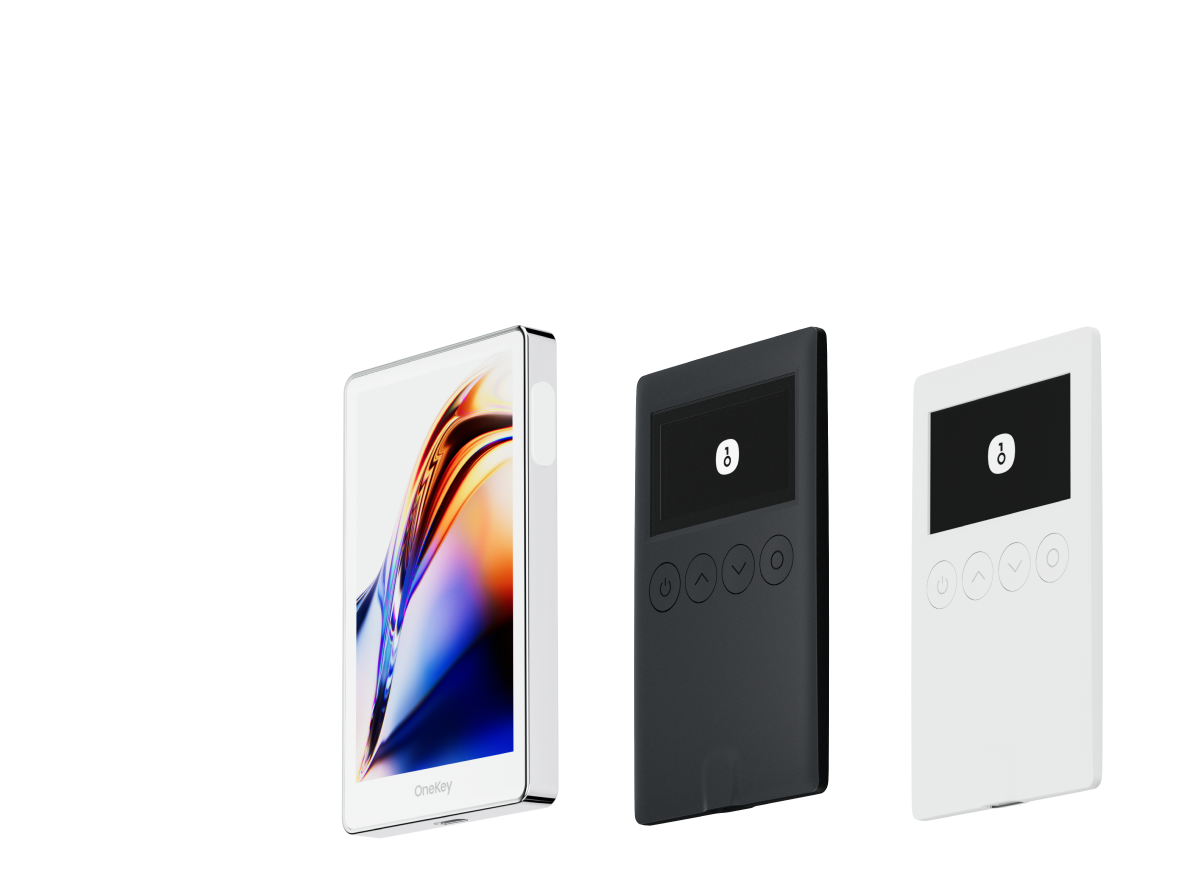
If you plan to transact privately and engage with DeFi, consider a hardware wallet that emphasizes open‑source design, multi‑chain support, and secure element protection. OneKey aligns with these priorities: it offers transparent development, broad network compatibility, and intuitive workflows for advanced features. Pairing XAN with OneKey can reduce operational risk when generating proofs, managing viewing keys, and interacting with privacy‑enabled dApps. For general guidance on cryptographic key management principles, review NIST SP 800‑57. NIST publication.
Adoption Path and Ecosystem Integrations
XAN’s adoption will hinge on practical integrations:
- Payments: Merchant plugins with optional VAT/proof‑of‑payment attestations.
- DeFi: AMM adapters for public wrappers, lending protocols that accept private collateral with proof‑based solvency checks.
- DAOs: Governance modules for private voting and contributor payroll.
- Bridges: Proof‑aware relayers that translate confidential events into public confirmations on destination chains.
Privacy‑preserving DeFi is already maturing. For a blueprint of hybrid architectures and research directions, see Aztec’s documentation and ecosystem updates. Aztec documentation. Modular DA layers like Celestia show how scaling can separate data availability from execution, improving costs for heavy privacy proofs. Celestia docs.
The Bottom Line
The future of DeFi demands confidentiality without sacrificing composability or compliance. XAN’s promise is to make privacy the default and disclosure programmable, standing on zk primitives, account abstraction, and modular scaling. As the regulatory environment evolves and users demand greater control over their information, assets like XAN can define a new standard for usable, compliant privacy.
If you are preparing to interact with privacy‑enabled protocols, protect your keys and workflows. A security‑first hardware wallet like OneKey can anchor your setup with offline signing, open‑source firmware, and robust multi‑chain support—critical when managing viewing keys, attestations, and private transactions in the XAN ecosystem.