What Is VISTA Token? Powering the Future of Web3 Infrastructure


Key Takeaways
• VISTA Token secures decentralized services through staking and cryptoeconomic guarantees.
• It acts as a medium of payment for network services, creating real demand.
• Governance by VISTA holders allows for protocol upgrades and treasury management.
• The token's economic design balances demand sinks and supply mechanics for sustainability.
• Key risks include smart contract vulnerabilities and economic dilution from emissions.
Web3 is shifting from monolithic blockchains to modular, service-oriented networks. In this world, infrastructure is not just code — it is a market where decentralized compute, storage, data availability, bandwidth, oracles, and cross-chain routing are provided by independent operators. Tokens that coordinate and incentivize these participants sit at the heart of the system.
VISTA Token is positioned as an infrastructure asset: a way to secure networks, pay for services, and govern upgrades. Whether you are a builder, a validator, or a user, understanding how VISTA could function within the modular stack will help you evaluate its long-term potential.
Why infrastructure tokens matter in 2025
- Modular blockchains are becoming standard, splitting execution, settlement, and data availability into separate layers. This opens competitive markets for specialized providers. Reference: Ethereum’s evolving roadmap explains the shift toward rollups and modularity. See the Ethereum roadmap for context (ethereum.org). Ethereum roadmap
- Data availability layers and rollups continue to scale throughput and reduce costs, with DA emerging as a dedicated sector. See Celestia’s primer on data availability. What is data availability?
- Restaking unlocks shared security across services by letting staked assets secure multiple middleware protocols. For a technical overview, read EigenLayer’s documentation. EigenLayer docs
- Decentralized Physical Infrastructure Networks (DePIN) bring bandwidth, storage, and sensor networks on-chain, creating real-world demand for crypto-native incentive mechanisms. Learn more in CoinDesk’s DePIN explainer. What is DePIN?
- Cross-chain interoperability remains critical for asset movement and service composition. For production-grade messaging, review Chainlink’s CCIP and Cosmos IBC designs. Chainlink CCIP • Cosmos IBC
In short, infrastructure is the backbone of Web3. Tokens like VISTA can be the coordination layer that pays providers, enforces security, and governs the network’s evolution.
What is VISTA Token?
At its core, VISTA Token is designed to do three things:
- Secure decentralized services via staking and cryptoeconomic guarantees.
- Act as a medium of payment for consumption of network services (e.g., data availability, routing, or compute).
- Govern protocol upgrades, parameter changes, and treasury allocations.
Exact specifications always depend on the project’s implementation. Before participating, verify official documentation, contract addresses, and audit status, and review any disclosures from the team or foundation.
Core utilities and token mechanics
-
Staking and security
- Validators or service operators stake VISTA to gain the right to provide services and earn rewards.
- Misbehavior (e.g., downtime, invalid responses) can lead to slashing to align incentives with reliability. See Solidity’s general security considerations for how common pitfalls manifest at the contract level. Solidity security considerations
-
Payments and fee markets
- Users or protocols pay fees in VISTA (or supported assets) to consume infrastructure services, creating real demand.
- Fees may be distributed to operators, partially burned, or routed to a treasury depending on governance choices.
-
Governance and upgrades
- VISTA holders can vote on protocol changes, emissions schedules, risk parameters, and treasury deployment.
- Governance can be progressive: starting with council-led stewardship and migrating to broader on-chain voting as participation grows. For frameworks, see Bankless’s tokenomics primer. Tokenomics 101
-
Collateralization and restaking
- VISTA may be used as collateral or restaked to secure additional modules (e.g., oracle networks, data services, or routing layers).
- Restaking expands security while introducing correlated risk; parameters should be conservative and transparent. Reference the EigenLayer model for shared security trade-offs. How restaking works
Architecture: modular by design
-
Execution, settlement, and DA
- VISTA-aligned services can plug into modular stacks: execution on rollups, settlement on a base chain, and data availability on specialized layers such as Celestia. Celestia docs
-
Interoperability and routing
- Cross-chain functionality is essential for user experience and liquidity. Multi-network routing via CCIP or IBC patterns can reduce fragmentation and enable multi-chain service composition. Chainlink CCIP • Cosmos IBC
-
Account abstraction (AA)
- As AA matures, infrastructure tokens can offer smoother payments, automated fee coverage, and programmable security policies. Learn more about AA fundamentals and EIP-4337. Account abstraction (EIP-4337)
-
Monitoring and risk transparency
- Public dashboards (e.g., L2Beat for rollups) set a high bar for transparency. Similar monitoring for VISTA-aligned services helps users evaluate maturity, trust assumptions, and upgrade risk. L2Beat
Economic design and sustainability
A durable infrastructure token needs a balanced economic system:
-
Demand sinks
- End-user fees, protocol integrations, and B2B usage (rollups, oracles, DA, routing) should create ongoing demand for VISTA-denominated services.
-
Supply mechanics
- Emissions often start higher to bootstrap operators and liquidity, then taper via halving or dynamic reductions as fee revenue replaces issuance.
-
Value flow
- Fee routing, buybacks, or burns can align long-term value with network usage, but must be transparent and adjustable via governance.
-
Operator economics
- Net yield = rewards + fees − operating costs − slashing risk. Clear disclosures around expected margins and variance help prevent unsustainable growth or safety compromises.
For a broader context on token design, review educational resources on crypto economies and governance trade-offs. Tokenomics 101
Key risks and what to watch
-
Smart contract and protocol risk
- Bugs, oracle dependencies, and upgrade safety are non-trivial. Look for audits, formal verification, and staged rollouts. Solidity security considerations
-
Economic risk
- Emissions-heavy models can dilute holders if fees do not grow. Demand-based fee sinks are crucial.
-
Correlated security
- Restaking can spread stake across multiple services; cascading slashing or shared failure modes must be modeled conservatively. EigenLayer docs
-
Interoperability risk
- Bridges and cross-chain messaging introduce additional attack surfaces. Review the security model of CCIP or IBC before relying on cross-chain operations. Chainlink CCIP • Cosmos IBC
How to evaluate VISTA
- Read the whitepaper and technical docs; verify chain and contract addresses via the project’s official channels.
- Check economic parameters: staking requirements, emission schedule, fee routing, and treasury policy.
- Review operator requirements (hardware, uptime, geographic distribution) and slashing rules.
- Confirm audit reports and bug bounty programs; assess upgrade mechanisms and emergency procedures.
- Monitor ecosystem integrations, real usage metrics, and third-party dashboards where available. L2Beat • Ethereum roadmap
Custody: holding VISTA securely
If VISTA is issued on a mainstream chain (e.g., Ethereum or compatible EVM networks), it can be stored with non-custodial wallets:
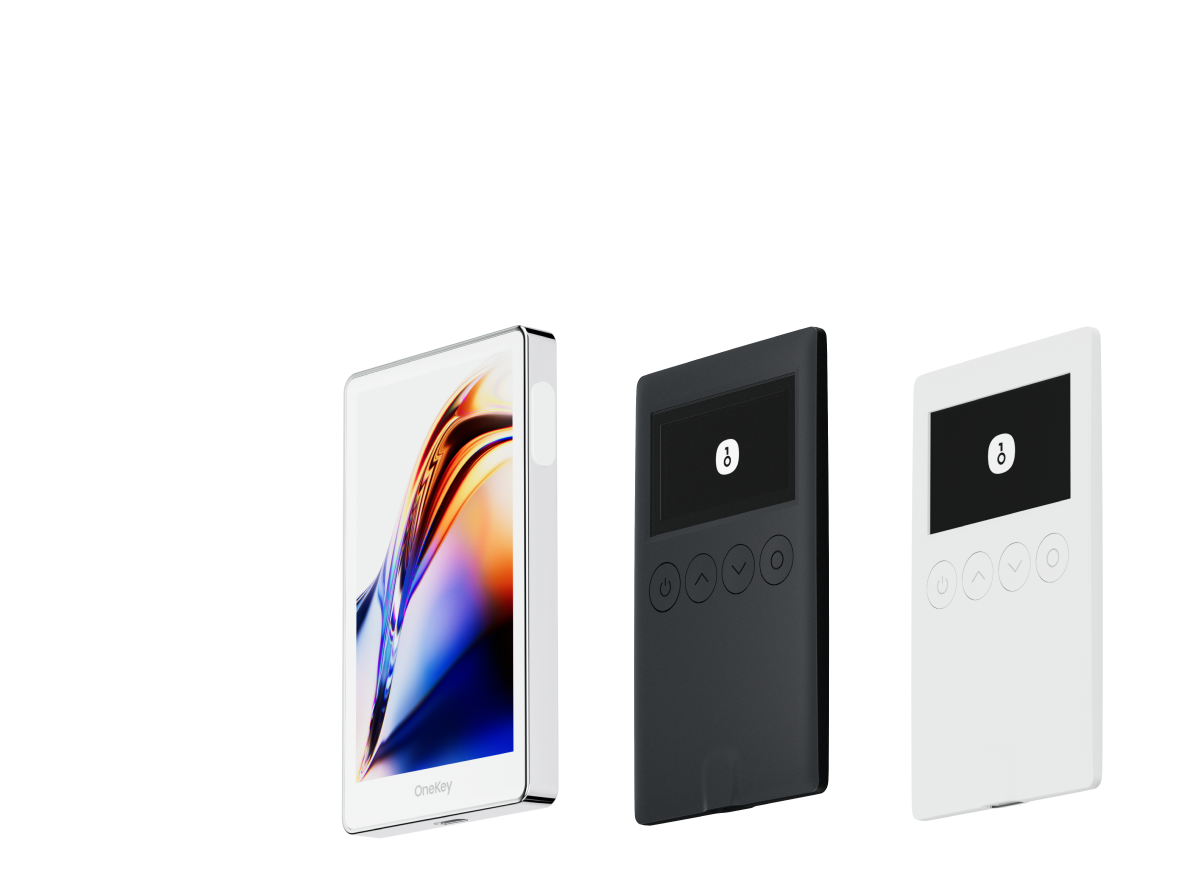
- Use a hardware wallet for cold storage, especially if you plan to stake or hold long-term. OneKey offers open-source firmware, multi-chain support, and transaction verification on-device, helping reduce risks from malware and phishing.
- Always double-check token contract addresses and network settings before signing.
- Consider separate wallets for hot (daily use) and cold (long-term) funds, plus clear recovery procedures and backups.
This setup aligns with infrastructure tokens’ operational demands: frequent interactions for staking or operator tasks, backed by strong cold storage for treasury and governance holdings.
Final thoughts
Infrastructure is where crypto meets real-world utility. Tokens like VISTA can coordinate participants, secure services, and align incentives across modular networks, restaking layers, and cross-chain routing. The projects that win will combine solid cryptoeconomics with transparent monitoring and robust security models.
If you plan to participate in VISTA’s ecosystem — whether as a holder, staker, or operator — prioritize secure custody and clear operational hygiene. A hardware wallet such as OneKey adds an extra layer of protection for long-term holdings while still letting you interact with Web3 services via secure signing and multi-chain support.