What Is VIRTUAL Token? Building the Next-Gen Metaverse Economy


Key Takeaways
• The VIRTUAL token serves as a utility, governance, and incentive token within metaverse protocols.
• It enables seamless transactions, community governance, and rewards for creators and developers.
• Security risks include smart contract vulnerabilities and market volatility; using a hardware wallet is recommended.
• Evaluating a VIRTUAL token involves checking its documentation, interoperability, and audit transparency.
• The future of the metaverse economy relies on robust token designs and open standards.
The metaverse is shifting from siloed, closed platforms into a composable, onchain network of virtual worlds, identities, and assets. At the center of this transformation sits the VIRTUAL token: a crypto asset designed to power economic coordination across immersive environments, creator economies, and AI-driven agents. This article explains what a VIRTUAL token typically represents, how it may be structured, and what to evaluate before participating—plus how to secure your assets with a hardware wallet.
Note: VIRTUAL here refers to a class of metaverse-focused tokens used by protocols that aim to unify virtual world economies. Specific implementations can vary; always verify the official documentation and contract addresses of the VIRTUAL token you’re researching.
Why the Metaverse Needs a Native Token
Traditional virtual economies are gated by centralized platforms and payment providers. A metaverse-native token provides:
- Seamless, programmable payments and microtransactions across worlds.
- Onchain governance for community-driven roadmaps.
- Incentives for creators, developers, and infrastructure providers.
- Liquidity for trading virtual land, items, and services.
- A base unit of account for AI agents and automated services.
These functions benefit from open standards and public blockchains, letting assets and identities travel across experiences rather than being locked into a single app or game. For technical foundations, most metaverse tokens are implemented under the Ethereum ecosystem using standards like the ERC‑20 token interface, allowing interoperability across DeFi, games, and wallets. Reference: ERC‑20 specification on the Ethereum website.
- ERC‑20 token standard: see the Ethereum developer docs at the official Ethereum site.
- Permit-based approvals for gasless payments: see EIP‑2612.
- NFT standards for items and avatars: see EIP‑721 and token-bound accounts via EIP‑6551.
What Is the VIRTUAL Token?
In many metaverse protocols, VIRTUAL acts as:
- Utility token: Used for purchases of in-world goods, avatar upgrades, access passes, and AI services.
- Governance token: Allows holders to vote on protocol parameters, world integrations, creator grants, and treasury allocations.
- Incentive token: Rewards builders for deploying experiences, maintains economic security through staking, and shares protocol-level fees back to active participants.
- Settlement asset: Serves as a bridge currency for marketplaces, cross-world asset transfers, and agent-to-agent payments.
Depending on the chain, the VIRTUAL token can be deployed on Ethereum mainnet or an L2 like Arbitrum or Polygon for lower costs and faster settlement. Learn more about Arbitrum on the official Arbitrum website and Polygon at the Polygon technology site.
Cross-World Interoperability
Metaverse economies depend on moving assets, state, and messages across chains and platforms. Two common approaches:
- Secure cross-chain messaging for asset portability: see Chainlink CCIP.
- Generalized interoperability frameworks: see LayerZero.
For avatars and items, token-bound accounts via EIP‑6551 enable NFTs to own assets and perform transactions, a powerful pattern for persistent identity across games and worlds. Reference: EIP‑6551 on the Ethereum website.
Open standards groups like OMA3 (Open Metaverse Alliance) are also pushing for shared schemas so assets and identities can travel across ecosystems without custom bridges. See OMA3 for ongoing initiatives.
Token Design: Distribution, Emissions, and Value Flows
A well-designed VIRTUAL token typically clarifies:
- Supply and emissions: Fixed vs. inflationary, vesting schedules for teams and early supporters, and long-term community allocations.
- Utility sinks and sources: Fees for transactions or services, staking requirements for creators or operators, and usage-based rewards.
- Treasury policies: How funds support grants, partnerships, and liquidity, plus transparent auditing and reporting practices.
To validate smart contracts and tokenomics, rely on block explorers and audit portals:
- Etherscan for contract addresses, holders, and onchain activity.
- OpenZeppelin documentation for secure contract patterns.
- CertiK for audits and security assessments.
Builder and Creator Monetization
A next-gen metaverse economy thrives when creators get paid. With VIRTUAL, monetization can include:
- Creator drops and access passes (NFTs and semi-fungible tokens).
- Pay-per-use services like AI companions, world hosting, or marketplace listings.
- Revenue shares from protocol fees distributed to stakers or governance-approved recipients.
Unity and Unreal Engine integrations are increasingly common, enabling game studios to embed onchain payments and asset logic directly into gameplay loops. Explore Unity and Unreal Engine for official engine capabilities.
UX Improvements: Account Abstraction and Gasless Flows
A frequent user concern is transaction complexity and gas fees. Account abstraction via EIP‑4337 enables smart accounts with features like batched actions, sponsored gas, and programmable permissions—critical for mainstream metaverse UX. See EIP‑4337 for the specification.
Combined with permit signatures (EIP‑2612) and relayers, users can enjoy near web2-like flows while retaining self-custody and programmability.
Security and Risk Considerations
Before acquiring or using any VIRTUAL token:
- Smart contract risk: Bugs or design flaws can exist even in audited code. Check audit reports and community disclosures. Reference: CertiK.
- Bridge risk: Cross-chain systems can be attractive attack surfaces. See Chainalysis’ analysis of bridge exploits for context.
- Governance attacks: Low voter participation and concentration can lead to capture; review governance parameters and quorum rules.
- Market volatility: Token prices can be highly volatile. Never risk funds you can’t afford to lose.
- Regulatory context: Tokens with fee-sharing or revenue claims may face securities scrutiny depending on jurisdiction. Consult local guidance and consider legal analyses where available.
How To Evaluate a VIRTUAL Token
Use a structured checklist:
- Protocol documentation and roadmap: Are use cases clear and feasible?
- Chain choice and scalability: Is the token deployed on a performant L2 with sustainable fees?
- Interoperability stack: How does it bridge assets and state across worlds? See Chainlink CCIP and LayerZero.
- Standards adoption: ERC‑20, EIP‑2612, EIP‑4337, EIP‑721/6551—these are signals of composability and forward compatibility.
- Dev activity and grants: Are there incentives for creators and builders; are SDKs available? See OpenZeppelin patterns.
- Audits and transparency: Public reports, bug bounties, multi-sig policies, and treasury transparency.
- Onchain metrics: Contract verification, holder distribution, and transaction patterns on Etherscan.
Where VIRTUAL Fits in 2025’s Metaverse Stack
Several trends are converging:
- AI agents and autonomous services: Onchain agents purchasing services, renting compute, and interacting across worlds. Projects often leverage account abstraction and token-bound accounts to make avatars “operational.”
- Cross-world identity: DID standards and token-bound accounts link identity to assets and actions across experiences. See the W3C DID core specification.
- Restaking-secured infrastructure: Protocols exploring shared security models and data integrity using restaking frameworks. See EigenLayer for a reference on shared security primitives.
VIRTUAL tokens that embrace these trends—while maintaining robust security and clear economic design—are well-positioned to become the connective tissue for the metaverse economy.
Practical Steps: Acquiring and Securing VIRTUAL
- Verify the official contract address on Etherscan before any purchase.
- Use a reputable DEX or centralized exchange; confirm listings and avoid look-alike tokens.
- Bridge cautiously; prefer audited solutions with clear security guarantees (see Chainlink CCIP and LayerZero).
- Store long-term holdings in a hardware wallet and interact via a trusted wallet interface.
Why a Hardware Wallet Matters for Metaverse Assets
Metaverse participation often means frequent signatures, asset transfers, and interactions with novel contracts. A hardware wallet isolates private keys in a secure element and signs transactions offline, greatly reducing phishing, key theft, and malware risks.
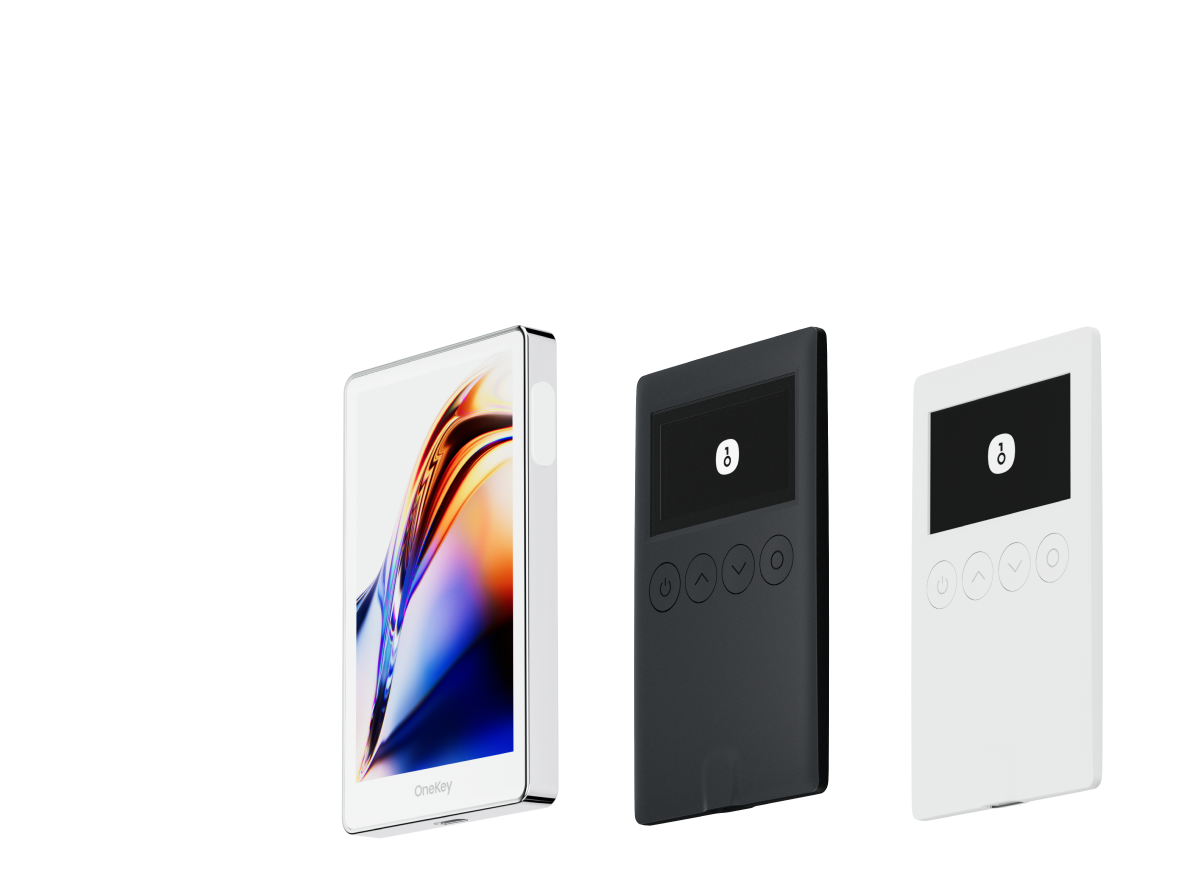
OneKey hardware wallets are open-source and designed for multi-chain usage, supporting major networks used by metaverse projects. If you plan to hold VIRTUAL long term or manage high-value NFTs, using OneKey can help you:
- Keep keys offline with transparent, verifiable firmware.
- Sign transactions securely across EVM and non-EVM chains via the OneKey app and WalletConnect integrations.
- Apply advanced protections like passphrases and multi-account setups aligned with your risk profile.
Choosing strong self-custody practices is as important as choosing the right token.
Final Thoughts
The VIRTUAL token aims to be more than a payment method—it’s a coordination layer for creators, players, and AI agents in a shared metaverse. Evaluate the token’s utility, interoperability, and governance, and secure your assets with a hardware wallet. With open standards (ERC‑20, EIP‑4337, EIP‑6551), cross-chain rails (Chainlink CCIP, LayerZero), and robust custody, the next-gen metaverse economy can be both immersive and trustworthy.
References:
- ERC‑20 Token Standard on Ethereum.org
- EIP‑2612: Permit for Gasless Approvals
- EIP‑4337: Account Abstraction
- EIP‑721: Non-Fungible Tokens
- EIP‑6551: Token Bound Accounts
- Chainlink CCIP
- LayerZero
- OMA3 (Open Metaverse Alliance)
- Etherscan
- OpenZeppelin Documentation
- CertiK
- Unity
- Unreal Engine
- W3C DID Core
- EigenLayer