What Is Numeraire (NMR)? The Token Behind AI-Powered Hedge Funds


Key Takeaways
• NMR is an ERC-20 token that incentivizes data scientists to submit predictive models for Numerai's hedge fund.
• Participants stake NMR on their models, earning rewards for positive contributions and facing slashing for underperformance.
• The Numerai Tournament and Signals initiatives enable crowdsourced predictions and stock-level signals, respectively.
• NMR provides measurable utility by linking model performance to financial rewards in a live trading environment.
• The token serves as a bridge between the crypto and institutional finance sectors, emphasizing accountability and risk management.
Numeraire (NMR) is an ERC‑20 token that powers Numerai, an AI‑driven hedge fund that crowdsources machine learning predictions from a global community of data scientists. Unlike most “AI coins,” NMR is tightly coupled to real trading signals and a live investment strategy: participants stake NMR on their models, earn rewards when those models help the fund, and face slashing when they underperform. This tokenized incentive system aligns model quality with capital performance and has made Numerai one of the most interesting crossovers between crypto incentives and institutional‑grade quant finance.
Numerai’s core initiatives include the Numerai Tournament (structured predictions on a proprietary dataset) and Numerai Signals (alternative data and stock‑level signals). If you’re curious about the mechanics, you can start with Numerai’s official resources on the Numerai Tournament and Numerai Signals, and dig deeper in the Numerai documentation.
How Numerai Works
-
Crowdsourced models
- Data scientists download an anonymized dataset and submit weekly predictions (Numerai Tournament), or upload equity signals sourced from their own data (Signals). Numerai aggregates these submissions into a “meta model” and trades global equities based on the ensemble.
- Overview and onboarding are available via the official Numerai Tournament page and Signals portal.
-
Staking with NMR
- Contributors stake NMR on their predictions to express confidence. If their model contributes positively to the fund’s objectives, they earn NMR payouts; if it harms performance, their stake can be slashed.
- This design turns NMR into performance‑backed collateral for AI predictions. For staking rules, metrics like “correlation” and “consistency,” and payout math, see the Numerai docs.
-
Real‑world trading
- Numerai runs an institutional hedge fund that implements the meta model in live markets. While the fund’s detailed performance and portfolio are not fully public, the core concept—aggregating crowdsourced AI into a tradable signal—is explained across Numerai’s official materials and updates on their Medium publication.
What Is NMR?
-
Chain and contract
- NMR is an ERC‑20 token on Ethereum. You can verify the official contract and token details on Etherscan.
-
Supply and profile
- Key stats, circulating supply, and market data are available via Messari’s Numeraire profile and the CoinMarketCap NMR page.
-
Utility
- Staking in the Numerai ecosystem
- Rewards for strong predictive performance
- Signaling and reputation for model builders
NMR is not a pure governance token; it’s primarily an economic primitive that binds predictive quality to capital incentives.
Why NMR Matters in the AI + Crypto Landscape
The AI + crypto theme often features tokens that promise future utility with limited tangible linkage to production systems. NMR is different in several practical ways:
- Measurable utility: Stakes are attached to models evaluated weekly on out‑of‑sample data; payouts and slashing hinge on performance. See staking methodology in the Numerai docs.
- Institutional bridge: Numerai translates community signals into a live hedge fund strategy rather than only prototyping or paper trading.
- Market discipline: Staking introduces downside for poor predictions, incentivizing careful feature design, validation, and risk management.
This closed‑loop between token incentives, AI model performance, and real trading sets a higher bar for utility compared to many speculative “AI coins.”
Key Mechanics: Tournament vs. Signals
-
Numerai Tournament
- Participants predict returns on an obfuscated dataset engineered to reduce data leakage and overfitting. The tournament focuses on generalizable patterns rather than raw ticker IDs.
- Learn how submissions, evaluation metrics, and staking tiers work in the Numerai documentation.
-
Numerai Signals
- Signals lets quants submit stock‑level signals derived from external data—fundamentals, alternative data, and custom features. It aligns more closely with a traditional quant workflow.
- Explore datasets and submission pathways at the Signals portal.
Both tracks enable NMR staking, rewards, and community‑driven iteration.
Recent Industry Context to Watch
-
Ethereum costs and infrastructure
- With ongoing network upgrades (such as Dencun in 2024), the Ethereum ecosystem continues improving cost efficiency, especially for L2s. If protocols integrate L2 rails for payouts or utilities, participants could benefit from reduced fees. See the official Ethereum Foundation write‑up on Dencun on mainnet.
-
AI model transparency and reproducibility
- Institutional appetite for AI strategies has grown alongside concerns about overfitting and model governance. Numerai’s approach—weekly evaluation on standardized datasets with performance‑tied staking—addresses part of this by enforcing continuous out‑of‑sample testing. For broader background on the project’s evolution and research updates, Numerai’s Medium publication aggregates official articles.
As always, follow project announcements on official channels for any updates to staking rules, payout mechanics, or datasets.
How to Acquire and Store NMR
-
Where to check markets
- You can find market listings and supported venues via CoinMarketCap’s NMR page and asset details on Coinbase’s NMR page.
-
Self‑custody basics
- NMR is an ERC‑20 token. When withdrawing from an exchange, ensure your destination address is an Ethereum address you control. Always double‑check the token contract on Etherscan and be aware of gas fees on Ethereum; for a primer, see Ethereum’s gas documentation.
-
Security with a hardware wallet
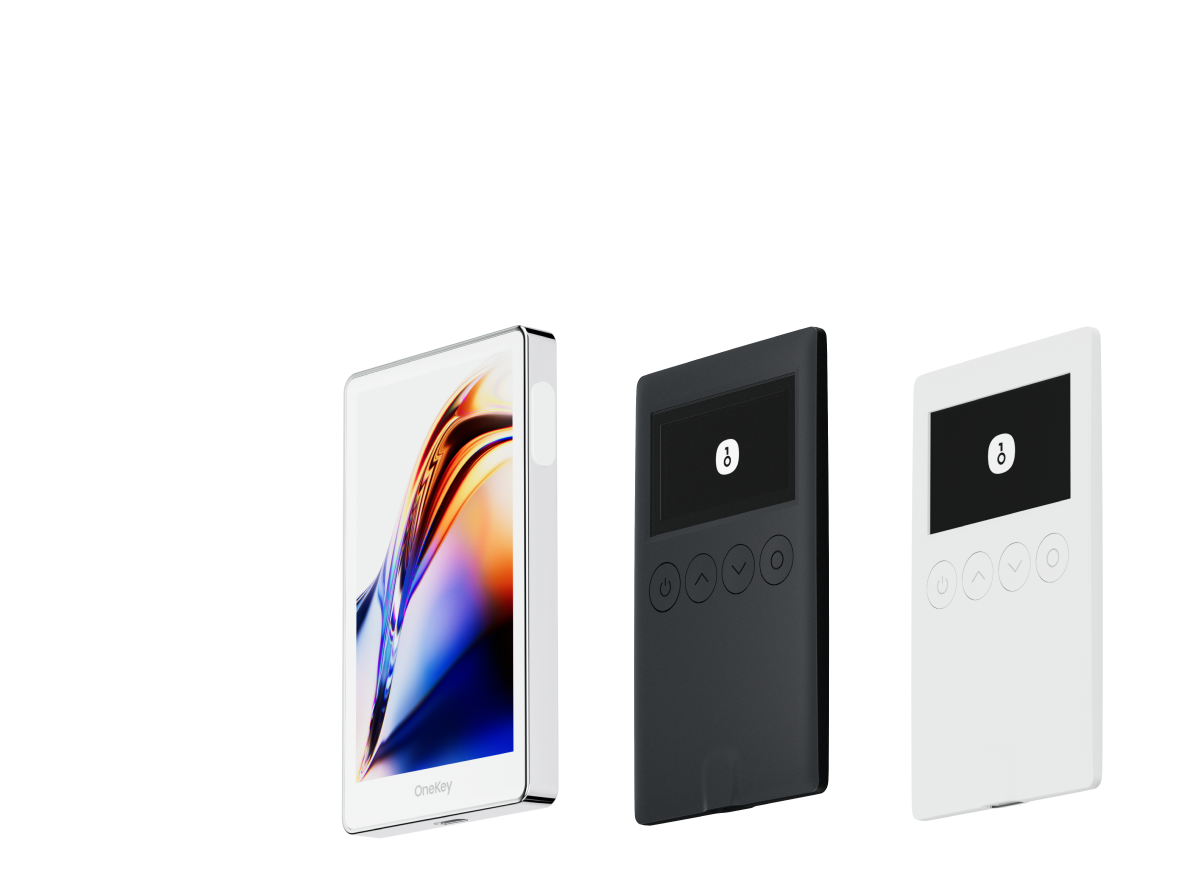
- For long‑term holders, self‑custody with a hardware wallet provides offline key storage and transaction confirmation on a trusted device. OneKey supports Ethereum and ERC‑20 tokens, clear‑signing where applicable, and an intuitive desktop/mobile app experience that makes it straightforward to verify token contracts, manage portfolios, and sign onchain operations. If your involvement in Numerai grows—from accumulating NMR to staking or interacting across EVM dapps—using a hardware wallet like OneKey can help reduce key‑management risk while keeping your assets under your sole control.
Risks and Considerations
-
Performance and slashing
- Staking NMR introduces downside risk when models underperform. Understand evaluation metrics and slashing rules in the Numerai docs.
-
Token volatility and liquidity
- NMR’s price can be volatile. Review market data and liquidity before making decisions via Messari or CoinMarketCap.
-
Centralization and policy risk
- Numerai is a company‑run hedge fund. Changes to tournament rules, payout schedules, or token economics can affect participants. Track official updates on the Numerai site and Medium publication.
-
Smart contract and operational risk
- As with any ERC‑20 asset, custody and transaction hygiene matter. Verify addresses and contracts on Etherscan and use hardware wallets for critical operations.
Final Thoughts
Numeraire sits at a unique intersection of crypto incentives and quant finance, aligning token economics with the performance of crowdsourced AI models that drive a live hedge fund. For data scientists, NMR represents a way to translate predictive skill into onchain stake and measurable, risk‑adjusted rewards. For holders, it’s a bet on the long‑term viability of this incentive system.
If you plan to hold NMR and participate in staking over time, consider using a hardware wallet like OneKey to secure your Ethereum keys and manage ERC‑20 assets with confidence. Strong custody practices let you focus on what actually matters in the Numerai ecosystem—building robust models, staking intelligently, and iterating on signals—without compromising the security of your capital.