What Is KOMA Token? Building the Next-Gen SocialFi Ecosystem


Key Takeaways
• KOMA Token serves as a coordination layer for a modular SocialFi ecosystem, focusing on utility and long-term participation.
• The token enables various functionalities such as tipping, subscriptions, and governance, aligning incentives for creators and users.
• Security is paramount; users should prioritize audited contracts and smart-wallet features to mitigate risks.
• The SocialFi landscape is shifting towards interoperable networks, making KOMA a potential key player in creator monetization.
SocialFi is entering a new phase. After early experiments with onchain social graphs and creator monetization, the sector is moving toward modular, programmable networks that unify identity, engagement, and revenue sharing in one place. Projects like Farcaster and Lens have demonstrated how open social protocols can unlock composable experiences and novel monetization primitives, while lower fees on Layer 2 networks make microtransactions and creator tipping finally practical. If you’re watching this space, you’re likely hearing about KOMA Token as a SocialFi–native asset aiming to align creators, communities, and developers in a single, scalable ecosystem.
This article breaks down how a next‑generation SocialFi stack could work, where a token like KOMA might fit, and what users should consider for security and participation.
For background on the SocialFi model and why it matters, see Binance Academy’s overview on SocialFi fundamentals, including social graphs, tokenized communities, and creator monetization via Web3 rails. Read more on Binance Academy
The SocialFi context: from protocols to programmable social
- Open social protocols such as Farcaster and Lens show that social isn’t just an app—it’s an ecosystem. Farcaster provides a developer‑friendly protocol that enables composable apps (e.g., in‑feed interactive “Frames”) and open identity primitives. Explore Farcaster docs
- Lens focuses on an open social graph that gives creators portable audience relationships across apps, while enabling developers to attach monetization and governance models directly to profiles and content. Learn about Lens
- On the payments side, ERC‑4337 account abstraction is making gas sponsorships, bundled actions, and smart‑wallet UX possible—critical for mainstream social interactions that involve small, frequent payments. Account abstraction explained
- Scaling via L2s like Base and Arbitrum enables low‑latency, low‑cost social transactions (tips, subscriptions, minting, voting) that would be prohibitive on mainnet alone. Base overview • Arbitrum overview
This technical backdrop is exactly where a token like KOMA can bind identity, engagement, and value flows into a coherent, creator‑centric SocialFi economy.
What is KOMA Token?
KOMA Token can be understood as the coordination layer for a modular SocialFi ecosystem. Rather than only serving as a speculative asset, its design can center on network utility and incentives that reinforce healthy, long‑term participation:
- Access and payments: settle tipping, paywall access, subscriptions, and in‑app microtransactions with low fees on L2.
- Curation and ranking: stake KOMA to curate feeds, boost content distribution, or underwrite discovery pools that reward high‑quality posts.
- Creator financing: stake‑to‑support models where fans deposit KOMA to back a creator’s season, sharing a portion of revenue or reputation reward.
- Governance: holders can vote on protocol parameters (e.g., reward weights, fee splits, safety policies), allocating treasury funds to builders and creators.
- Developer incentives: grants and streaming rewards for building new modules (identity, analytics, content safety), paid in KOMA.
The goal is to align creators, curators, and developers around transparent metrics and shared upside, reducing spam and sybil attacks while rewarding contributions that grow the network.
Architecture: a modular SocialFi stack
A robust SocialFi ecosystem needs more than a token—it needs interoperable modules that are open to compose:
- Identity and reputation
- Portable profiles with verifiable badges and non‑transferable credentials (e.g., “soulbound” achievements for contributions).
- Aggregated reputation scores gate certain actions (e.g., boosting, moderation rights), reducing bot impact.
- Leverage open social graphs for portability across apps. Lens protocol
- Content and storage
- Decentralized storage via IPFS or Arweave for permanence and censorship resistance, with moderation overlays in the app layer. IPFS documentation
- Engagement mechanics
- Tokenized curation: stake KOMA to boost content visibility; slashing ties curation to quality.
- Microtransactions: tips, pay‑per‑view, and subscription payments using smart accounts and sponsored gas. Account abstraction
- Governance and safety
- Onchain governance for parameters and treasury; offchain signaling for rapid iteration. OpenZeppelin governance contracts
- Risk modules (spam filters, rate limits) pluggable at the client level.
- Interoperability
- Cross‑chain messaging for moving KOMA and state proofs across EVM L2s, improving liquidity and reach. LayerZero docs
Token design and economics
Designing a SocialFi token requires balancing utility, incentives, and sustainability:
- Supply and emissions
- Transparent cap and predictable emissions; early community distributions favor creators, curators, and builders over pure passive yield.
- Fee flows
- A portion of protocol fees can fund the treasury, with buyback or grants decided by governance to avoid rigid, gameable mechanisms.
- Staking and slashing
- Staking aligns curators and moderators; slashing or loss of privileges penalizes low‑quality or abusive behavior.
- Anti‑sybil and proof‑of‑human
- Combine reputational scoring, rate limits, and selective proof‑of‑personhood for high‑impact actions; preserve privacy where possible. Community‑driven proof‑of‑humanity solutions offer reference designs. Proof of Humanity
- Developer security baseline
- Use well‑audited primitives (ERC‑20, governance, safe upgradeability) and formal audits before releases. OpenZeppelin ERC‑20
Why SocialFi now?
Two forces converge in 2025: composable social protocols and practical onchain UX. Farcaster’s developer ecosystem has shown how open social can evolve rapidly when the protocol is permissionless and the app surface is extensible. Combined with L2 scalability and smart‑wallet UX, SocialFi can move beyond speculation into durable creator commerce—subscriptions, gated communities, collaborative funding, and onchain revenue sharing.
At the same time, security and compliance expectations are rising. Users need better protection against scams, and protocols must build safety by design. Chainalysis tracks evolving scam typologies and illicit finance patterns that SocialFi teams should consider for threat modeling and monitoring. Crypto crime trends
How KOMA could integrate with existing social protocols
- As a “payments and curation layer” for Farcaster or Lens clients, KOMA can power tipping, subscriptions, and curated boosts with staking economics that discourage spam. Farcaster architecture • Lens social graph
- Developers can build “Frames” or in‑feed apps that use KOMA for gated access, crowdfunding, or community governance proposals.
- For creators, KOMA‑backed seasons can structure revenue sharing and fan participation across multiple apps, increasing portability and reducing platform lock‑in.
Security, self‑custody, and user experience
SocialFi is uniquely exposed to scams due to high engagement and frequent transactions. Users should:
- Prefer audited, open‑source contracts and verified apps.
- Use smart‑wallet features (session keys, spend limits) to minimize risk.
- Store long‑term assets and governance power in hardware wallets; interact with social apps via delegated or session keys to reduce exposure.
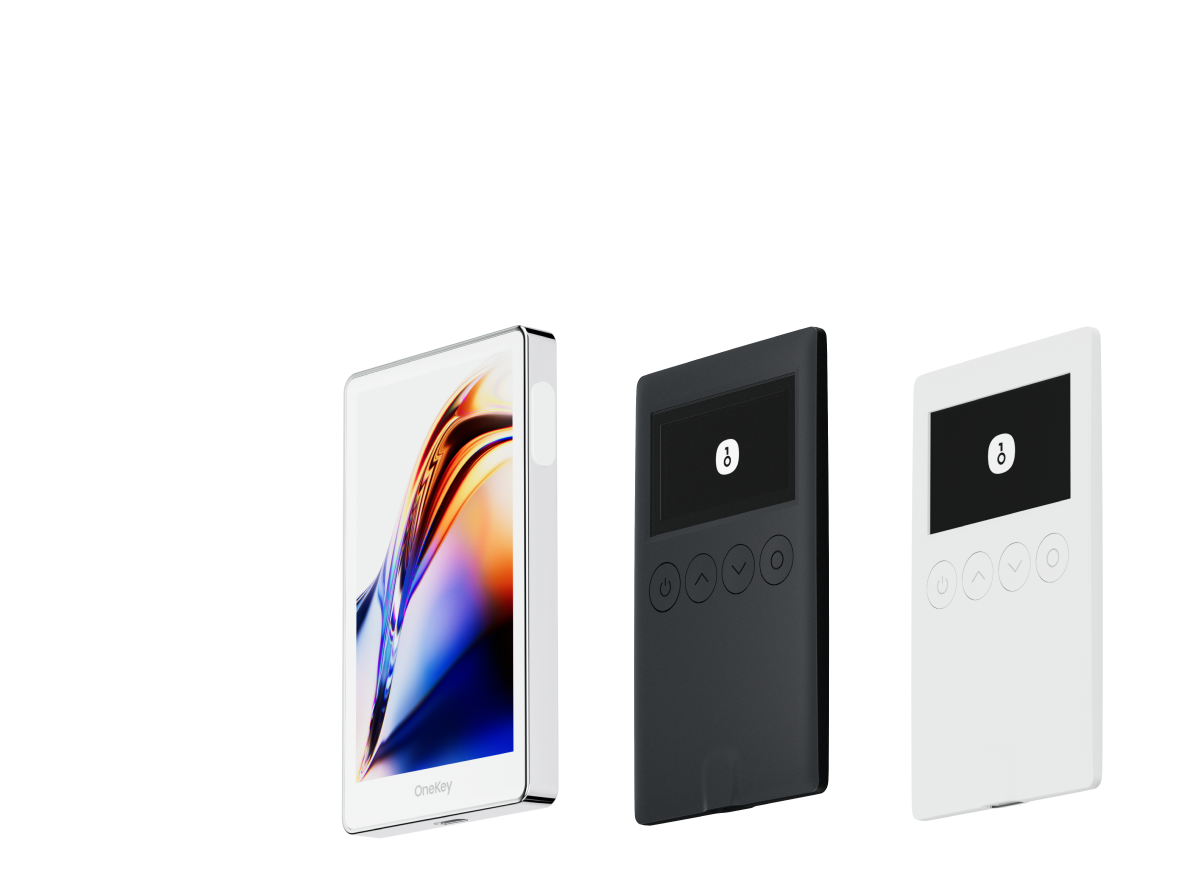
If you plan to hold KOMA for governance or creator staking, OneKey hardware wallet can provide an extra layer of protection while keeping daily social UX smooth. OneKey supports major EVM and L2 networks, integrates with WalletConnect for dApps, and enables offline signing so your private keys never leave the device. For SocialFi participants who maintain both long‑term treasuries and active onchain engagement, combining a secure hardware wallet for cold storage with a smart account for day‑to‑day actions is a practical, safety‑by‑design approach.
Key risks and considerations
- Volatility: Social tokens can be highly momentum‑driven; avoid over‑exposure.
- Sybil and bots: Incentive leakage is real—curation and rewards must be robust against manipulation.
- Regulatory uncertainty: Tokens with revenue sharing or financial promises may have regulatory implications; design incentives as access and utility where possible.
- Liquidity fragmentation: Multi‑chain deployments can split liquidity; use reliable cross‑chain messaging and clear canonical asset design. LayerZero messaging
Getting started with a SocialFi ecosystem like KOMA
- Explore open social protocols and clients; experiment with developer sandboxes. Farcaster docs • Lens docs
- Use an L2 for lower fees when trying tipping or subscriptions. Base • Arbitrum
- Practice safe self‑custody and transaction hygiene; hardware wallets for treasury, smart accounts for daily use. Account abstraction
- Participate in governance with thoughtful proposals and data‑driven metrics.
Final thoughts
SocialFi is maturing from isolated creator tokens to interoperable, programmable networks. A token like KOMA can serve as the connective tissue for identity, engagement, and value alignment—if its design anchors on utility, security, and developer‑friendly modularity. With open social protocols, L2 scalability, smart‑wallet UX, and sound token economics, SocialFi can become a durable distribution and monetization channel for the creator economy.
As you explore or invest, treat security as a first‑class feature. Store long‑term holdings and governance power in a hardware wallet such as OneKey, and use smart‑wallet session keys for day‑to‑day social interactions. This balanced setup helps you capture SocialFi’s upside while staying protected in a fast‑moving onchain environment.