URANUS Token Guide: The Bold and Out-of-This-World Crypto Project


Key Takeaways
• Verify the exact contract address, chain, and official channels before engaging with URANUS tokens.
• Conduct thorough due diligence by checking token standards, contract verification, liquidity, and holder distribution.
• Be aware of common scams and risky patterns in the crypto space to protect your investments.
• Use hardware wallets for enhanced security and manage token approvals carefully.
The crypto market keeps reinventing itself, and 2024–2025 has been the era of high-velocity memecoins, experimental tokenomics, and cross-chain liquidity games. URANUS is one of those “out-of-this-world” narratives — sometimes surfacing as a legacy utility token from past cycles, sometimes as a brand‑new memecoin with sky-high volatility on fast L1s or emerging L2s. This guide focuses on how to evaluate any URANUS‑branded token you encounter, what red flags to watch for, and how to handle custody and on‑chain operations safely.
Note: Because multiple projects and tickers have used the URANUS name, always verify the exact contract address, chain, and official channels before taking action.
What URANUS Might Be in 2025
- A legacy ERC‑20 with old documentation and thin liquidity, possibly tied to an earlier decentralized computing or cloud narrative.
- A new memecoin deployed on a high‑throughput chain (often Solana or an EVM L2) chasing community momentum, viral marketing, and early liquidity.
- Forks and impersonations across chains; names and tickers can be reused, so provenance matters more than branding.
In each case, your due diligence steps are similar — confirm the chain, contract, liquidity, and provenance, and then assess whether the token’s mechanics match its narrative.
Step‑by‑Step Due Diligence
-
Identify the chain and token standard
- For Ethereum and EVM L2s, confirm it is a valid ERC‑20 and review the interface and events on an explorer. Start with the ERC‑20 reference on Ethereum’s docs and implementation patterns in the OpenZeppelin library for a baseline of expected behavior. See the ERC‑20 overview on the Ethereum Foundation’s site and the OpenZeppelin ERC‑20 documentation at:
- ERC‑20 overview: https://ethereum.org/en/developers/docs/standards/tokens/erc-20/
- OpenZeppelin ERC‑20: https://docs.openzeppelin.com/contracts/4.x/erc20
- For Solana, verify the SPL token mint, decimals, and freeze authority via the SPL Token Program docs: https://spl.solana.com/token
- For Ethereum and EVM L2s, confirm it is a valid ERC‑20 and review the interface and events on an explorer. Start with the ERC‑20 reference on Ethereum’s docs and implementation patterns in the OpenZeppelin library for a baseline of expected behavior. See the ERC‑20 overview on the Ethereum Foundation’s site and the OpenZeppelin ERC‑20 documentation at:
-
Verify the contract and ownership
- On EVM chains, confirm contract verification and read the source via block explorers; see the Etherscan verification guide: https://docs.etherscan.io/verify-contracts
- Check owner privileges, minting rights, blacklist/whitelist gates, and fee logic. Excessive privileges are a risk.
-
Check liquidity and trading venues
- Inspect DEX pools, liquidity locks, and depth. Use protocol docs and analytics frontends to understand how swaps route and how fees/slippage are handled. Start with Uniswap’s developer docs and chain-agnostic DEX discovery:
- Uniswap docs: https://docs.uniswap.org/
- DEX Screener: https://dexscreener.com/
- On Solana, explore the token and its largest pools and holders on Solscan: https://solscan.io/
- Inspect DEX pools, liquidity locks, and depth. Use protocol docs and analytics frontends to understand how swaps route and how fees/slippage are handled. Start with Uniswap’s developer docs and chain-agnostic DEX discovery:
-
Analyze holder distribution and emissions
- Large allocations to deployers or a few wallets are risky unless clearly disclosed.
- Time‑locked or vested emissions should be transparent, with on‑chain schedules.
-
Validate the narrative with real artifacts
- Look for audited code, open repositories, or an actual product roadmap rather than only memes.
- If it’s purely a memecoin, accept that the thesis is community momentum — and size positions accordingly.
-
Control permissions and revoke approvals
- Don’t leave unlimited approvals on unknown contracts. Use the Etherscan Token Approval Checker to revoke risky allowances: https://etherscan.io/tokenapprovalchecker
-
Watch for common scams and rug patterns
- Fake liquidity, stealth taxes, trading restrictions, and centralized mint control are repeat offenders. For a broader risk backdrop, review the latest Chainalysis Crypto Crime Report summaries: https://www.chainalysis.com/crypto-crime/
Where Could URANUS Live?
- EVM L2s (e.g., Base): Gas is cheap, and liquidity often forms quickly around new narratives. Learn how these L2s secure themselves and track their adoption profile via resources such as L2Beat and the Base documentation:
- L2Beat: https://l2beat.com/
- Base docs: https://docs.base.org/
- Solana: Memecoins exploded here thanks to fast finality, high throughput, and active retail participation. Understand token mechanics via Solana’s SPL reference: https://spl.solana.com/token
Because identical names can exist cross‑chain, prioritize the verified contract address over everything else.
Tokenomics Questions to Answer Before You Buy
- Supply and emissions
- Fixed supply or mintable? If mintable, who controls minting and under what rules?
- Taxes and fees
- Are there buy/sell taxes, dynamic fees, or blacklist logic?
- Liquidity
- How much initial liquidity was added? Was liquidity locked, and for how long?
- Ownership and governance
- Is ownership renounced? If not, what admin functions remain, and are these justified?
- Utility or pure meme
- If utility is promised, is there a working product or at least a public testnet timeline? If pure meme, acknowledge the speculation.
Trading Considerations
- Slippage and price impact
- Thin pools require higher slippage tolerances; use modest size to avoid being front‑run.
- MEV awareness on EVM
- Priority gas auctions and sandwich attacks can worsen execution. Learn how MEV works via Flashbots docs: https://docs.flashbots.net/
- Cross‑chain bridges
- If chasing URANUS across chains, prefer reputable, audited bridges and understand the additional trust assumptions. Bridge risk can exceed token risk.
Security and Self‑Custody
Speculative tokens heighten key‑management risk because malicious contracts can drain wallets via approvals or permit signatures. Best practices:
- Keep your private keys offline and sign only what you understand.
- Use separate addresses for degen trading versus long‑term holdings.
- Regularly review and revoke token allowances on EVM using the Etherscan Token Approval Checker: https://etherscan.io/tokenapprovalchecker
- Verify every contract address using official team channels and reputable explorers before interacting.
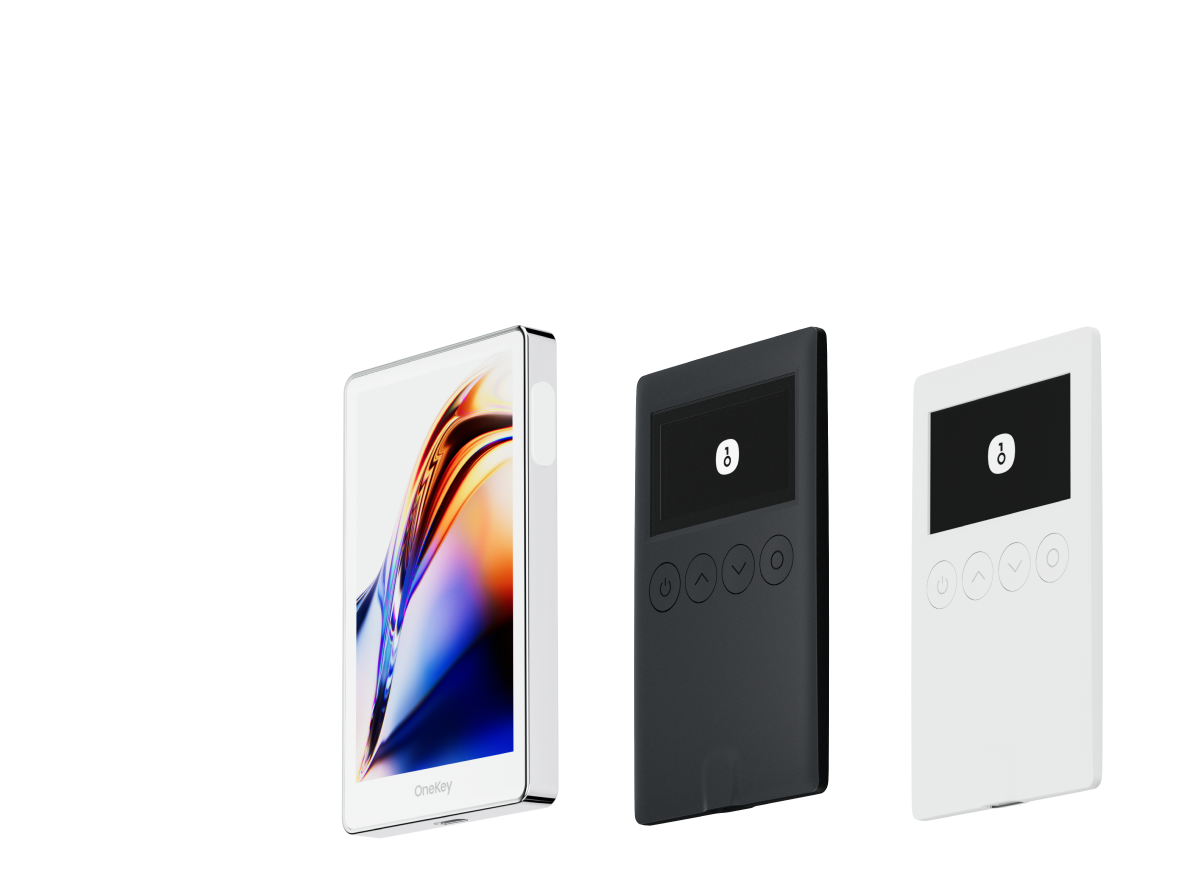
For those who actively speculate but still want robust security, a hardware wallet like OneKey can help isolate your private keys from online threats while still letting you participate across chains. OneKey supports major networks such as Bitcoin, Ethereum/EVM, and Solana, provides clear signing interfaces so you can inspect transactions and approvals before confirming, and integrates with popular dapps for a smoother flow between custody and execution. This is especially valuable when exploring new or unverified contracts where a single mis‑click can be costly.
If You Already Hold URANUS
- Monitor developer communications for contract upgrades, migrations, or renounced ownership announcements.
- Track liquidity changes and large holder movements; set alerts where possible.
- Beware of “airdrop claim” sites or migration forms not posted on official channels.
- Consider routing interactions through a dedicated “hot” address funded with only what you can afford to risk, keeping your main holdings offline.
Market Context: Why URANUS‑Type Tokens Thrive
- Low‑cost blockspace and social virality have lowered the barrier to launching tokens, amplifying speculative cycles on both Solana and EVM L2s.
- Liquidity incentives and DEX composability encourage rapid market formation with minimal gatekeeping.
- Community‑first narratives can outperform fundamentals short‑term — but fundamentals and transparent token mechanics remain the best long‑term defense against capital loss.
For broad price discovery and market references, use reliable aggregators and cross‑check listings on data sites with verified contracts. Start from the main directories and proceed to the specific token page only after confirming authenticity:
- CoinMarketCap: https://coinmarketcap.com/
- CoinGecko Learn (DYOR and education): https://www.coingecko.com/learn
The Bottom Line
URANUS is a bold brand — and like many “out‑there” tokens, it can represent wildly different contracts, chains, and risk profiles. Treat the name as a signal to slow down, verify on‑chain facts, and separate narrative from mechanics. If you choose to participate:
- Verify the exact contract, chain, and permissions.
- Inspect liquidity, holder concentration, and admin rights.
- Use hardware‑backed self‑custody and revoke risky approvals.
- Size positions for extreme volatility and accept the possibility of total loss.
And if you’re going to explore the frontier, bring the right safety gear. OneKey’s hardware‑first approach, multi‑chain support, and clear signing UX make it a practical companion for speculative environments — so you can chase the next out‑of‑this‑world narrative without compromising your keys.