The Hidden Risks of Tangem Card Wallets: Is Convenience Really Equal to Security?


Key Takeaways
• Card wallets lack screens and computing power, making them only capable of “blind signing”—signing without reviewing transaction content
• If the frontend is compromised, users may unknowingly approve fake or malicious transactions that look normal on screen
• Hackers can manipulate approvals, spoof token prices, or delay execution, all while the card wallet signs without questioning
• Card wallets do not display recipient addresses, amounts, contract data, or chain ID—making verification impossible
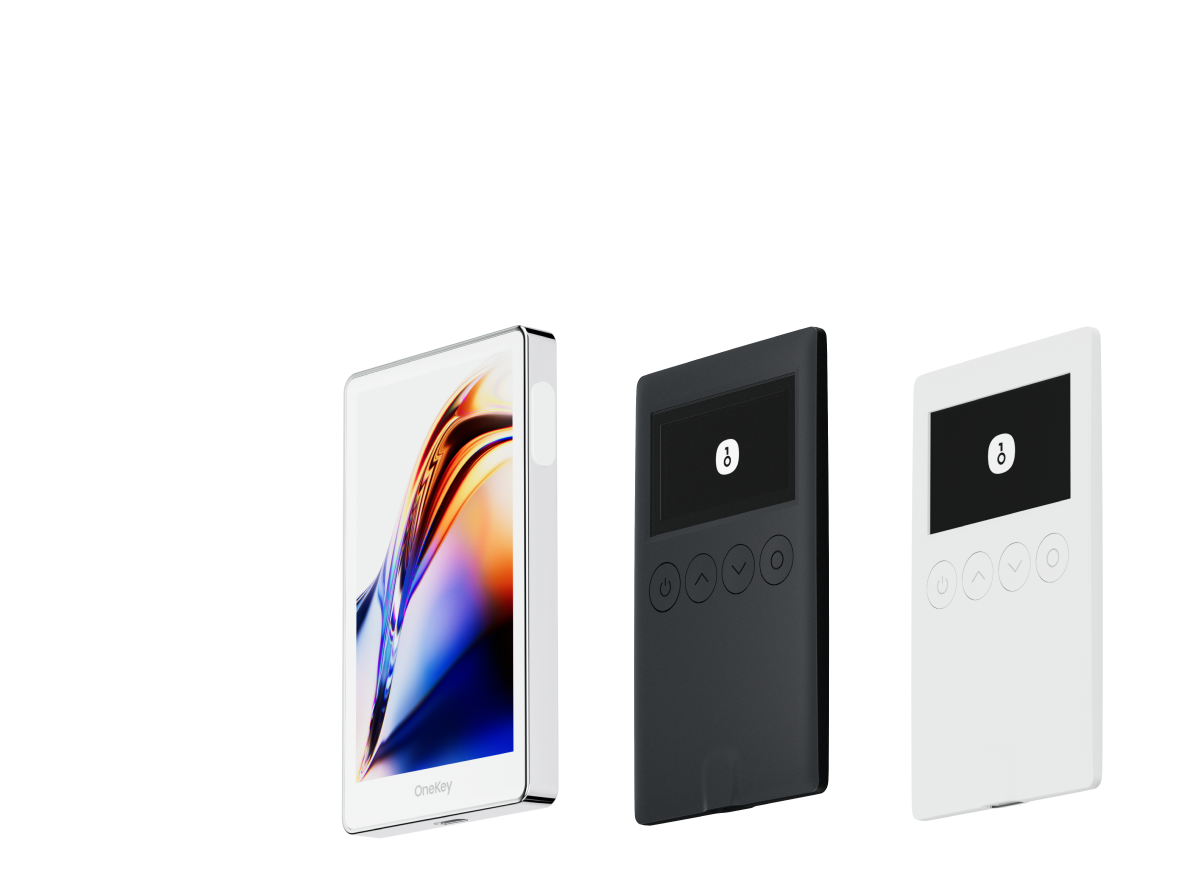
• Screen hardware wallets like OneKey Pro locally parse transactions and display key info, enabling true “What You See Is What You Sign”
• DeFi interactions often include hidden or multi-step approvals, which blind-signing devices cannot detect
• Card wallets are better suited for offline backup of seed phrases or private keys, not for active use
• “Signature successful” means nothing if you never saw what you signed—visual confirmation is your last line of defense
Why Tangem Card Wallets Can Only Perform Blind Signing
A Tangem card wallet looks compact, seemingly a “minimal” version of a hardware wallet. But its underlying design means Tangem can only perform blind signing:
- No screen, so it cannot display the actual transaction details.
- Limited storage and computing capacity—able to sign, but not to verify what is being signed.
- All transaction information depends on the phone or computer app frontend; what you see on screen and what is actually signed may not match.
In other words, Tangem is essentially a “signing machine” that does not know or care what it is signing. This is its greatest limitation—once the frontend is compromised, the consequences can be devastating.
Real-World Risks in Daily Use
1. Retail Investor: A Small Transfer Wipes Out Everything
A retail investor tries to send 50 USDT to a friend. The mobile app shows the amount and address are correct, so he confidently confirms with his Tangem card. The screen pops up “Signature Successful,” and he feels reassured.
One minute later, the wallet balance hits zero. His phone had been infected with malware; the interface displayed fake data, while the actual command passed to Tangem was “transfer all funds.”
Tangem had no ability to re-confirm or independently verify this transaction. By the time he realized, the funds were unrecoverable.
This technique has been used in the real world. Hackers tampered with frontend signing interfaces, tricking users into approving swapped data. Bybit once suffered losses of over one billion dollars from such an attack.
A hardware wallet with a screen would have parsed the real transaction data—showing “to whom” and “how much”—so the user could reject the fraudulent request on the spot.
2. DeFi User: One Approval Becomes Unlimited Drain
On a DeFi platform, prompts like “Please approve 100 USDT to continue” are common. A user encounters such a message, thinks it’s routine, and confirms with Tangem.
Hours later, the entire wallet is drained. Why? The approval wasn’t for “100 USDT” at all—it was unlimited allowance. From that moment, the counterparty could take everything at will.
A parsing-capable hardware wallet would display the “approval target” and “allowance amount,” with a warning such as “unlimited approval—are you sure?” But Tangem provides no such context; it simply signs mechanically.
3. Token Trader: “Best Rate” Turns Into Worthless Tokens
A token trader uses an aggregator to swap tokens. The interface highlights “Best rate on the market.” Tempted, he signs with Tangem.
But he receives tokens that are completely illiquid and unsellable. Behind the scenes, the attacker rerouted the order to a fake liquidity pool. The price looked attractive, but the swap delivered nothing of value.
A hardware wallet with a screen would show the “token contract address” and “transaction path summary,” making it clear this was not a standard trading pair.
4. Corporate Treasurer: Today’s Signature, Funds Stolen Days Later
A company treasurer needs to process multiple payments in bulk. Using Tangem, he signs, assuming it’s just routine same-day transfers.
But the transactions were set with delayed execution conditions, only triggering days later. When the funds disappeared, it was too late.
Tangem simply signed at the moment, without indicating there were additional conditions attached.
On the Bitcoin network, delayed execution is supported natively and can sometimes be parsed by screen-equipped devices. But on other chains, where such features are implemented via smart contracts, detection is extremely difficult. Blind signing on Tangem makes these risks even easier to overlook.
Tangem Card Wallet vs. Screen Hardware Wallet: A Clear Comparison
Industry Trends and Security Advice
In the blockchain industry, “What You See Is What You Sign” has become the gold standard for hardware wallets. Whether it’s a transfer, an approval, or a contract interaction, only when critical details are shown on an independent screen for user confirmation can frontend tampering truly be mitigated.
Tangem card wallets were initially designed for portability and simplicity. But as hacking techniques evolve, a device like Tangem that only acts as a blind signer is no longer sufficient to protect serious assets.
If one still wishes to use a card form factor, the safest role is long-term backup for seed phrases or private keys—not daily transaction signing.
A Smarter Way to Use Them
The portability of Tangem cards is not useless. They can serve as backup storage for seed phrases or private keys, kept safe like an insurance policy.
But relying on Tangem for daily transactions means you are handing security over entirely to your phone or computer.
The safer approach is: use a screen-equipped hardware wallet (like OneKey Pro) for all signing, and keep a OneKey Lite card for seed phrase/private key backup.
This way you get the convenience of a card, without building your transaction security on the illusion of blind signing.
FAQ
Q1: Is Tangem safe?
Tangem’s security depends almost entirely on your phone or computer. If the frontend is compromised, Tangem offers no independent protection at signing.
Q2: What is “blind signing”?
Blind signing means the device signs without displaying or confirming transaction details. You can’t see the real data, so you might unknowingly approve a high-risk operation.
Q3: Can Tangem replace a screen hardware wallet?
No. Tangem lacks independent verification. At best, it can serve as a backup tool, not a daily transaction device.
Q4: Can the OneKey Lite card be used for signing transactions?
No. The Lite card is designed for seed phrase/private key backup. It cannot display or confirm transactions.
Conclusion
The lightweight design of Tangem card wallets often makes people overlook their built-in limitations. One blind signature could mean a complete wipeout.
True protection doesn’t come from the message “Signature Successful,” but from you personally checking every detail on a secure device screen—before pressing confirm.