OPUS Token Explained: The Future of Decentralized Music Platforms


Key Takeaways
• OPUS token facilitates real-time streaming payments and royalty distribution.
• Decentralized music platforms enhance transparency and direct monetization for artists.
• Recent blockchain upgrades make micro-payments and on-chain royalties practical.
• Community governance ensures that stakeholders can influence protocol rules.
• Security measures, such as hardware wallets, are essential for protecting assets.
The music industry is moving toward a trust-minimized, creator-first model, where artists, curators, and fans can share value without intermediaries. In this shift, the OPUS token represents a programmable way to coordinate incentives, settle royalties, and power the governance of decentralized music platforms.
This article explains how an OPUS token can work, why it matters, and how recent blockchain upgrades make micro‑streaming and on‑chain royalties finally practical.
Why Decentralized Music Matters
Traditional streaming aggregates control and revenue, leaving artists with low transparency and limited direct monetization. Web3 music networks flip the model by allowing:
- Direct payment rails for artists and rights holders
- Transparent royalty splits enforced by smart contracts
- Community-led curation and discovery with incentive alignment
- Composability with NFTs, DeFi, and identity primitives
Projects like Audius have shown the viability of decentralized music distribution, creator tools, and tokenized incentives, offering a useful reference point for open, community-owned infrastructure. See the Audius docs for how decentralized discovery and staking work in practice: Audius Documentation.
What Is the OPUS Token?
OPUS is a conceptual ERC‑20 governance and utility token for decentralized music platforms. It can be used to:
- Settle streaming payments and royalty splits in near real time
- Incentivize community curation, playlist building, and discovery
- Govern protocol parameters (e.g., payout cadence, fee models, content moderation rules)
- Stake to secure indexing, storage gateways, and content delivery
- Reward listeners for verifiable engagement without enabling bot farms
By leveraging well‑known Ethereum token standards, OPUS aims for interoperability, auditability, and composability across the Web3 stack. For the baseline token interface, see the ERC‑20 spec on the Ethereum developer portal: ERC‑20 Token Standard.
On‑Chain Royalties and Rights Management
A decentralized music protocol needs royalty enforcement that works across marketplaces and player apps. The industry is converging on open royalty standards like EIP‑2981 for NFTs, which defines a simple interface for creators to signal and receive royalties on secondary sales. While EIP‑2981 is primarily NFT‑oriented, the same pattern applies to programmable splits for music rights and stems:
- Use NFT memberships or track licenses as on‑chain assets
- Attach royalty rules and payout addresses at mint time
- Route revenue from sales, remixes, or derivative works
Explore the royalty interface here: EIP‑2981: NFT Royalty Standard.
For storage of audio files and metadata, decentralized networks like IPFS and Arweave provide content addressing and resilience. See IPFS Documentation and Arweave.
Micropayments Are Becoming Practical
A historic friction for streaming on chain has been gas cost and latency. With Ethereum’s Dencun upgrade and data availability improvements for Layer‑2 networks, the economics of micro‑transactions are shifting. Lower L2 fees and blob‑based data make frequent payments more feasible, enabling per‑second or per‑play streaming payouts to rights holders. Read more: Dencun on Ethereum Mainnet and the overview of Layer‑2 scaling on Ethereum.org.
Protocols for real‑time finance such as Superfluid can stream token flows continuously, enabling OPUS to distribute payouts as listeners consume content without batching delays: Superfluid Documentation.
Core Design Principles
- Composability: OPUS should work with NFTs (ERC‑721/1155), token‑bound accounts for asset-native wallets, and account abstraction for better UX. See EIP‑6551: Token Bound Accounts and EIP‑4337: Account Abstraction.
- Open Metadata: Audio files and rights data stored via IPFS/Arweave with verifiable hashes ensure resilient distribution and transparent provenance.
- Oracles and Off‑chain Inputs: Streams, engagement metrics, and off‑chain licensing data can be bridged using decentralized oracle frameworks when necessary. For a general overview of oracle patterns, see Chainlink Docs.
- Governance: Token‑weighted or quadratic voting allows stakeholders to evolve protocol rules, fees, and anti‑fraud measures while maintaining openness.
Token Economics and Incentives
An effective OPUS economy balances growth and integrity:
- Utility: The token facilitates payments, staking for service providers (indexers, gateways), and curation rewards.
- Distribution: Initial allocation should reserve a meaningful share for creators and community contributors, avoiding extractive models.
- Anti‑Sybil: Rewards must be tied to verifiable engagement. Combining attestations, identity primitives, and reputation tools (e.g., passports) can deter bots while preserving privacy. Explore one approach with Gitcoin Passport.
- Fee Recycling: Part of protocol fees can buy and redistribute OPUS to active participants or fund community grants.
Compliance Considerations
Music rights intersect with securities, consumer protection, and licensing. Projects should align with evolving guidance:
- In the EU, the MiCA framework establishes requirements around issuance, disclosures, and stable assets, which may affect how music tokens are launched and marketed. Reference: Markets in Crypto‑Assets (MiCA).
- In the U.S., understanding the SEC’s digital asset framework helps teams design tokens with clear utility and avoid investment‑contract pitfalls. Reference: SEC Framework for “Investment Contract” Analysis of Digital Assets.
None of this is legal advice—teams should consult counsel for jurisdiction‑specific rules.
Developer and Artist Integration
A decentralized music stack with OPUS can look like this:
- Rights as NFTs: Track rights, stems, or memberships minted as ERC‑721/1155; royalties exposed via EIP‑2981.
- Streaming Payments: Listener wallets stream OPUS to rights holders via Superfluid; splits are enforced by smart contracts.
- Discovery: Curators stake OPUS on playlists; successful curation earns rewards; spam is penalized via slashing rules.
- Modularity: Integrations with L2s for cheaper settlement, token‑bound accounts for artist catalogs, and account abstraction for gas‑sponsored onboarding.
The Ethereum developer resources provide foundational primitives and standards to build these components: Ethereum Developer Docs.
2025 Outlook: What’s Changing
- Cheaper L2 Settlement: Post‑Dencun, blob‑enabled data availability continues to reduce transaction costs on rollups, making micro‑royalty flows viable at scale. See Dencun on Mainnet.
- Better UX: Account abstraction and gas sponsorship are improving onboarding for non‑crypto‑native listeners and artists.
- Rights Composability: Standardized royalty interfaces and storage make on‑chain licensing more portable across apps.
- Community‑Owned Platforms: We’re seeing growth in DAO‑led governance for creative communities, aligning incentives among artists, curators, and fans.
How Users Might Acquire and Use OPUS
- Acquire OPUS via decentralized exchanges on Ethereum or L2s
- Use OPUS inside compatible music apps to pay for streams, tip artists, or stake on curation pools
- Participate in governance to shape protocol rules and fee models
- Store OPUS and music NFTs securely in a self‑custodial wallet
Security: Why Hardware Wallets Matter
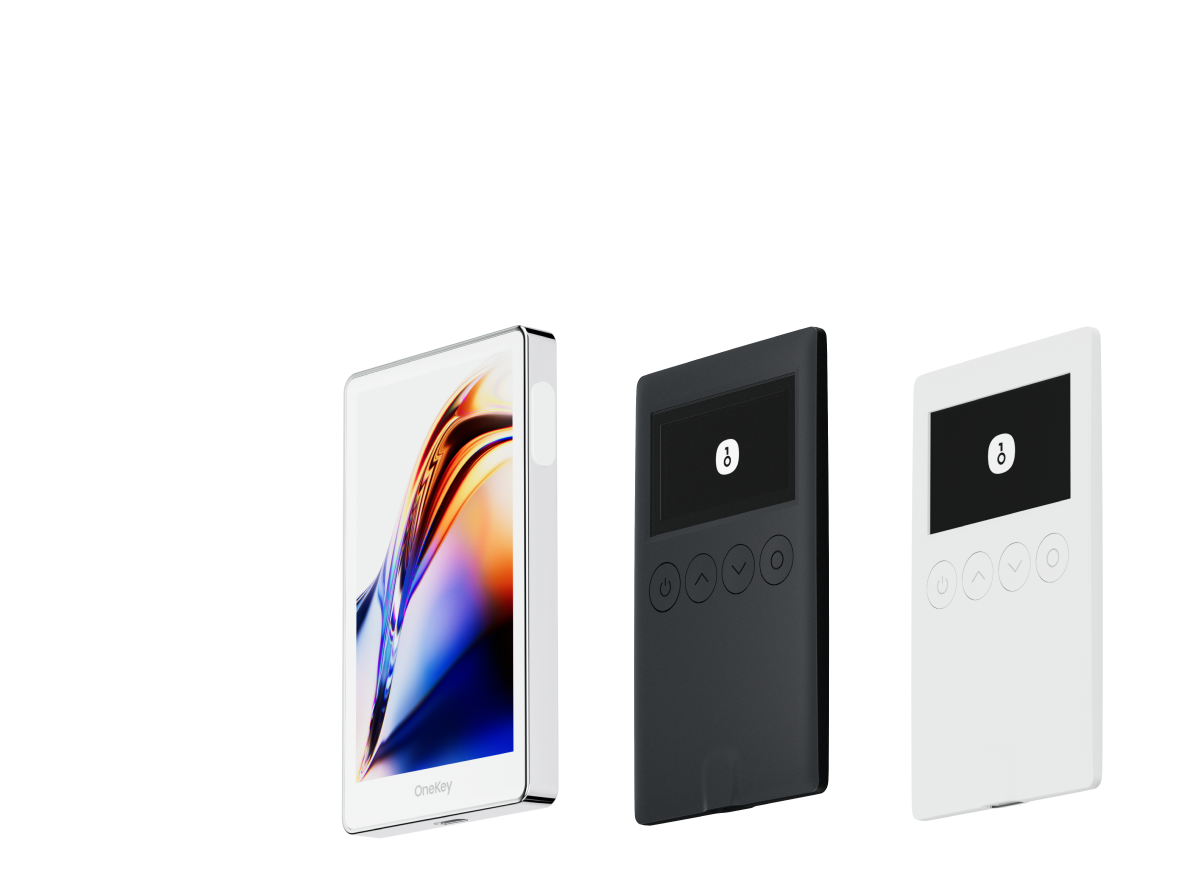
If you hold OPUS for governance, long‑term staking, or royalty payouts, a hardware wallet adds an important layer of protection against malware and phishing. OneKey is a user‑friendly, multi‑chain hardware wallet that supports Ethereum and major L2 networks. It allows you to:
- Keep private keys offline while interacting with music dApps via secure signing
- Manage ERC‑20 tokens and music NFTs with clear transaction prompts
- Use open‑source firmware and transparent security practices to minimize trust
For creators and curators who plan to receive continuous payouts or vote frequently, pairing a hardware wallet with a daily‑driver software wallet can balance convenience and security.
Conclusion
Decentralized music platforms are entering a phase where the core building blocks—royalties, storage, identity, and micropayments—are robust and affordable. An OPUS token can unify these elements into a cohesive incentive system that rewards creativity and curation, brings fans into the value loop, and keeps governance in the community’s hands. With Layer‑2 scalability, royalty standards, and better UX, 2025 looks set to turn “streaming on chain” from a demo into a viable business model.
Whether you’re an artist, developer, or curator, secure key management is essential. If you plan to hold OPUS for long‑term governance or royalties, consider a hardware wallet like OneKey to keep your assets safe while you help build the next era of music on chain.