OneKey vs MetaMask for Hyperliquid: Which Wallet is Better?
Hyperliquid today: HyperCore + HyperEVM changes what “wallet compatibility” means
Hyperliquid isn’t “just another dApp on Ethereum.” It’s a purpose-built Layer 1 with two major execution environments:
- HyperCore: fully onchain order books for perpetuals and spot
- HyperEVM: an EVM environment secured by the same consensus, designed to make HyperCore liquidity composable for apps and builders
You can read Hyperliquid’s own high-level architecture overview in the official docs: About Hyperliquid (official docs) and HyperEVM (official docs).
Why this matters for wallets
From a wallet perspective, you’re not only thinking about “can I connect to the trading UI,” but also:
- Which network you’re interacting with (e.g., deposits on Arbitrum vs using HyperEVM features)
- How often you need to sign messages (logins, permissions, bot authorizations)
- How you defend against phishing and malicious signature requests
Hyperliquid also explicitly warns that there is no official app store app, and advises users to verify URLs to avoid lookalike domains: Hyperliquid Support Guide (official).
What you use a wallet for on Hyperliquid (practically)
Even if Hyperliquid’s trading flow feels smooth, your wallet is still the gatekeeper for key actions:
- Connecting to the interface and establishing a session
- Signing messages (often “gasless” but still security-sensitive)
- Depositing / withdrawing (depending on the asset path and network)
- Using HyperEVM apps, which may require different RPC / chain settings
Hyperliquid’s own troubleshooting notes also highlight that switching between networks (for example, back to Arbitrum for USDC deposits, or to HyperEVM when using HyperEVM) can be part of resolving connection issues: Connected via wallet (official Hyperliquid docs).
MetaMask for Hyperliquid: the “default” choice (with real trade-offs)
MetaMask is often the first wallet traders try because it’s widely supported across Web3 sites and has a familiar extension + mobile experience.
Where MetaMask fits Hyperliquid well
- Fast onboarding: install extension, connect, sign, trade
- Broad dApp compatibility: most frontends test against MetaMask first
- Rapid product evolution: MetaMask has been actively shipping UX changes aimed at a multi-network world (which matters as more users touch HyperEVM-style environments)
For example, MetaMask’s published roadmap highlights efforts to reduce network-switching friction and add account management improvements like multiple Secret Recovery Phrases and profile sync: MetaMask roadmap 2025.
MetaMask’s risk profile (what experienced traders worry about)
MetaMask is a hot wallet. That doesn’t mean it’s “unsafe,” but it does mean:
- Your keys (or signing authority) live on an internet-connected device
- Browser-extension attack surface is real (malicious extensions, injected scripts, phishing overlays)
- The most common failure mode is not cryptography—it’s you getting tricked into signing something
If you use advanced features like plugins, you also inherit supply-chain and permission risks. MetaMask’s own developer documentation emphasizes strict handling of sensitive data and dependency hygiene for Snaps: Snaps security guidelines (MetaMask docs).
Bottom line: MetaMask is great for speed and compatibility, but the security model depends heavily on endpoint hygiene (clean browser profile, careful signature review, strict URL verification).
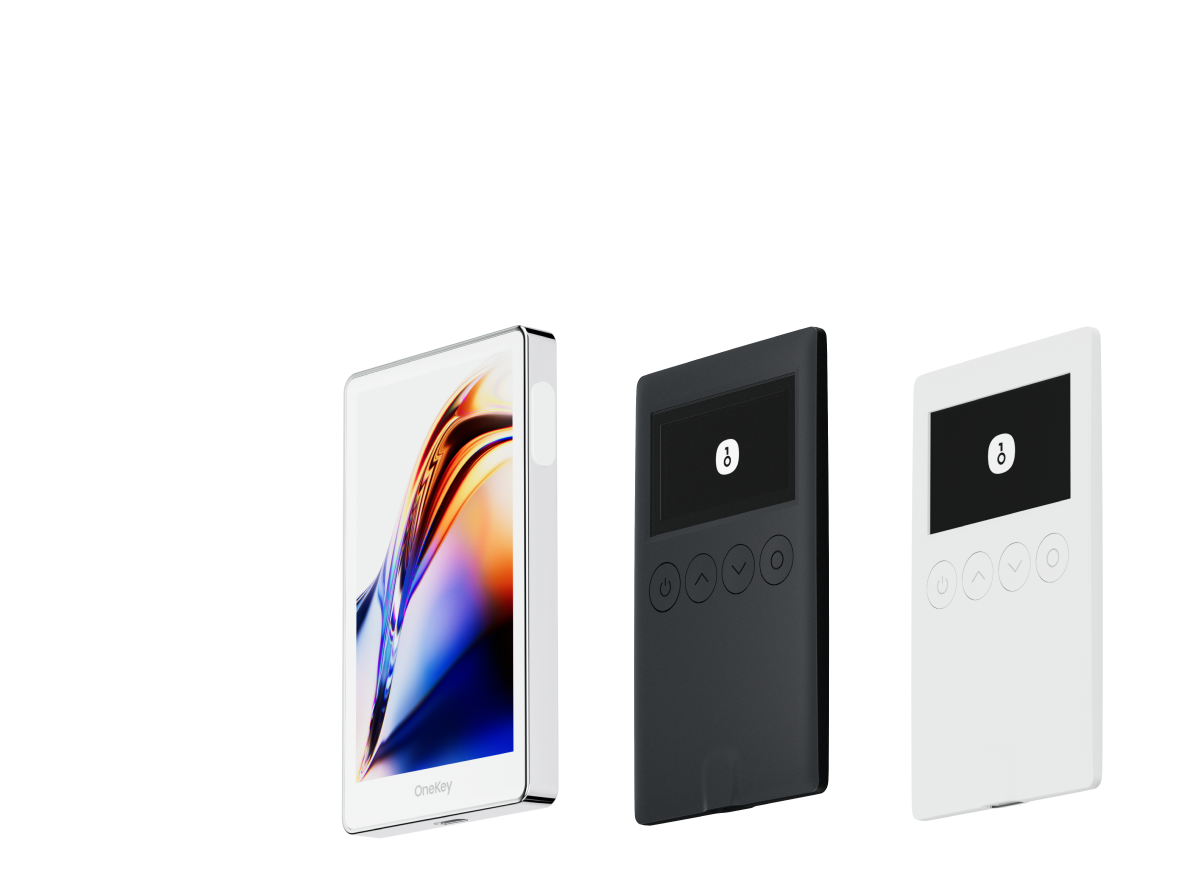
OneKey for Hyperliquid: when you want the private key offline
OneKey’s core advantage is straightforward: hardware wallet security. Instead of trusting your browser environment to keep keys safe, you shift to a model where:
- The private key remains offline
- Signing happens on the hardware device
- You confirm actions on a dedicated screen, reducing the chance of silent approvals
What this changes for Hyperliquid traders
Hyperliquid traders are frequently exposed to the exact scenarios hardware wallets are designed for:
- Connecting to multiple frontends/tools
- Signing bot / agent authorizations
- Operating during high volatility (when mistakes happen)
- Clicking links from social media (where phishing is rampant)
In that environment, OneKey is less about “can I connect” and more about reducing the blast radius when the browser is not perfectly trustworthy.
The usability reality (and why some traders still use MetaMask)
Hardware security adds friction:
- You must have the device available
- You may sign more slowly (especially if you’re frequently changing settings or using multiple accounts)
- If your workflow is extremely high-frequency, you might prefer a hot wallet for small balances
That’s why, in practice, many serious traders don’t treat this as a binary choice.
OneKey vs MetaMask for Hyperliquid: a practical comparison
The best setup is often OneKey + MetaMask (not OneKey or MetaMask)
If you want MetaMask’s compatibility but don’t want MetaMask to be the sole key store, a common approach is:
- Use MetaMask as the interface
- Use OneKey as the signer (hardware-backed account)
- Keep a separate hot account only for small operational funds (if needed)
This hybrid pattern is especially useful on platforms like Hyperliquid, where signing events are frequent and phishing attempts are common.
Automation on Hyperliquid: understand agent / API wallets before you choose
Many Hyperliquid users eventually explore automation (rebalance tools, DCA, strategy execution). This introduces a new wallet concept: agent or API wallets.
Some tools connect to your Hyperliquid account through an agent wallet and explicitly state that you keep custody and that the agent cannot withdraw funds, focusing permissions on strategy execution: HyperStackz “Launch & Connect” docs.
Other workflows involve creating an API wallet and authorizing it via a signature, which increases operational convenience but requires careful key handling: Velo HyperEVM manual connection.
Practical takeaway
- If you will store any API wallet private key (for bots or tools), treat it like a production secret.
- Prefer isolating your main assets behind stronger signing guarantees, and only delegate limited permissions where possible.
- For serious size, hardware-backed signing is a meaningful upgrade—not because the protocol is weak, but because humans are.
Connection reliability: what to do when Hyperliquid “won’t connect”
Connection problems are often not “funds problems,” but wallet-extension / network-state issues:
- Update the wallet extension
- Hard refresh / clear cache
- Disconnect and reconnect
- Switch networks (and switch back), especially when moving between deposit flows and HyperEVM usage
Hyperliquid documents these troubleshooting steps directly: Connectivity issues: connected via wallet (official docs).
Final verdict: which wallet is better for Hyperliquid?
Choose based on how much you trade, how often you sign, and what you’re protecting against:
- If you’re exploring Hyperliquid with small size and want maximum convenience, MetaMask is usually the fastest path.
- If you’re trading meaningful size, using multiple Hyperliquid-related tools, or you simply want a safer default against phishing and compromised browsers, OneKey is the better long-term wallet choice.
- If you want the best of both worlds, use MetaMask for UX and OneKey for hardware-backed signing—a setup that aligns well with the security realities of onchain perpetual trading.
In 2026, the most expensive mistakes in crypto rarely come from “bad math.” They come from bad signatures. Your wallet choice is ultimately your signature policy—make it match your risk.