NEUR Token Explained: Building the Brain of the AI Blockchain

Key Takeaways
• NEUR token acts as the core utility and governance token for AI blockchains.
• It incentivizes contributions by rewarding useful work and securing network integrity.
• The token facilitates verifiable coordination and governance through on-chain proposals.
• NEUR supports a marketplace for data, compute, and models, enhancing AI system performance.
• Proper key management is crucial for users and agents interacting with the NEUR token.
As artificial intelligence and crypto converge, a new class of networks is emerging where models, data, and compute trade like digital commodities. In this landscape, the NEUR token is designed to act as the “brain” of an AI blockchain: metering intelligence, rewarding useful work, securing coordination, and governing evolution. This article breaks down how a token like NEUR can architect incentive alignment for decentralized AI, what it means for builders and users, and how to hold it securely.
Why AI + Blockchain Needs a “Brain” Token
AI systems thrive on three pillars—data, compute, and models. Blockchain adds a fourth: verifiable coordination. The result is an internet-scale marketplace where agents pay for inference, contributors get rewarded for training, and models can be audited and governed on-chain.
- Market demand for AI crypto is surging as more networks tokenize model outputs, datasets, and compute supply. Category tracking offers a snapshot of scope and liquidity across AI-related assets and use cases, helping users navigate the space more effectively. See the current AI token category overview on CoinGecko for recent activity and market breadth at the sector level (Artificial Intelligence category overview).
- Decentralized machine intelligence networks already show how crypto-native incentives can shape model quality over time; for example, Bittensor aligns contributions with rewards via subnets and staking, offering a template for proof-of-intelligence systems (Bittensor technical docs).
In short, building an AI blockchain without a token is like deploying a neural net without a loss function—there’s no mechanism to learn, adapt, or coordinate. NEUR fills that gap.
What Is NEUR?
NEUR is the core utility and governance token of an AI blockchain, engineered to:
- Meter and pay for compute: Inference, fine-tuning, and data retrieval fees are settled in NEUR across a decentralized compute layer (Akash documentation).
- Reward useful work: Contributors earn NEUR for verifiable improvements in routing, training, data curation, and model evaluation (Bittensor technical docs).
- Secure the network: Staking and slashing align incentives for honest participation and penalize malicious behavior (Ethereum Proof-of-Stake slashing overview).
- Govern upgrades and parameters: Holders shape policy, emissions, and model registry rules via on-chain proposals (Snapshot DAO governance platform).
Conceptually, NEUR acts as the “synaptic weight” of the system—adjusting incentives to route attention (capital) to high-quality intelligence.
Core Architecture: Data, Compute, Models
A robust AI blockchain revolves around three domains. NEUR ties them together:
-
Data provenance and pricing
- Datasets are registered, versioned, and traded with on-chain metadata and off-chain storage, e.g., IPFS and Filecoin (IPFS technical docs; Filecoin documentation).
- Trusted data providers and curators earn NEUR as their datasets drive measurable model improvements. Data tokens and vending mechanisms can be implemented via patterns proven in data markets like Ocean Protocol (Ocean Protocol docs).
-
Compute markets
- Inference and training are dispatched to permissionless GPU providers who stake and get paid in NEUR, enabling transparent price discovery for compute (Akash documentation).
- Providers submit proofs (attestations or zero-knowledge claims, depending on the job) verifying they executed the task as requested. ZK primitives can help validate parts of the pipeline (Ethereum zkSNARKs overview).
-
Model registry and evaluation
- Models have on-chain identities with version hashes and performance benchmarks, governed by NEUR-weighted votes or delegated expert committees.
- Routing engines select models dynamically; evaluators earn NEUR for high-signal testing that prevents overfitting and gaming.
Token Utility and Value Accrual
For a token like NEUR to become the brain of an AI network, utility must be intrinsic and recurring:
- Fees: Users pay NEUR for inference, retrieval, and fine-tuning. Protocol can implement dynamic pricing based on demand and supply.
- Staking and slashing: Node operators, data providers, and evaluators stake NEUR to guarantee quality and collateralize behavior. Persistent misreporting, data poisoning, or downtime incur penalties (Ethereum Proof-of-Stake slashing overview).
- Incentive emissions: New NEUR can be distributed to contributors based on verifiable metrics—accuracy improvements, robustness, latency, or fair routing across diverse models (Bittensor technical docs).
- Buyback and burn mechanisms: A portion of protocol fees may buy back NEUR to offset emissions and align long-term scarcity with network growth.
- Governance power: NEUR holders decide critical parameters—evaluation weights, trusted-oracles sets, and cross-chain deployment—optimizing signal over time (Snapshot DAO governance platform).
Verifiability: From Attestations to ZK
The biggest question users ask: can we trust what the model claims it computed? There are several approaches:
- Attestation-based proofs: Compute providers sign job receipts that can be cross-checked with randomized auditing and redundancy protocols.
- Zero-knowledge proofs: For certain workloads (e.g., deterministic transforms, parts of inference), ZK allows proving correct execution without revealing inputs (Ethereum zkSNARKs overview).
- External verifiable inputs: Data integrity and content addressing rely on IPFS / Filecoin with cryptographic hashes to ensure what was trained is what’s served (IPFS technical docs; Filecoin documentation).
- Oracle frameworks: Chainlink Functions and CCIP can transport trusted signals or off-chain compute attestations across chains, enabling multi-network composability and settlement (Chainlink Functions; Chainlink CCIP).
Combining these tools yields a layered trust model suitable for production-grade AI networks.
Interoperability: Agents That Pay Across Chains
AI agents will run wherever users are, so NEUR must be composable:
- Token standards: Compatibility with common interfaces (e.g., ERC-20) means seamless exchange and integration across EVM ecosystems (ERC-20 standard on ethereum.org).
- Account abstraction and token-bound accounts: Agents can hold NEUR, manage keys, and trigger on-chain actions with richer identity semantics (Ethereum EIP-6551).
- Cross-chain messaging: Cosmos IBC and generalized bridges enable NEUR to circulate and settle across multiple environments, allowing compute to live where GPUs are, while governance stays where liquidity is (Cosmos IBC overview; Chainlink CCIP).
Governance: Curating Intelligence
NEUR governance must balance decentralization with expertise:
- Weighted voting with safeguards: Use quorum thresholds, timelocks, and delegated voting to domain experts.
- Model registry control: Lists of production-grade models, evaluation benchmarks, and anti-gaming heuristics evolve via on-chain proposals (Snapshot DAO governance platform).
- Parameter tuning: Emissions, fraud proofs, and slashing rules adapt as the network scales and threat models evolve.
Risk and Compliance
AI blockchains carry unique risks:
- Model poisoning and sybil attacks: Incentive design should reward robust evaluation and impose slashing where appropriate (Ethereum Proof-of-Stake slashing overview).
- Privacy leakage: Favor privacy-preserving training and ZK attestations wherever feasible (Ethereum zkSNARKs overview).
- Regulatory clarity: Token classification and disclosure must consider jurisdictional rules. US market participants can reference the SEC’s digital asset framework; the EU’s MiCA sets comprehensive requirements for crypto-asset issuance and service providers (SEC framework for digital assets; EU MiCA regulation text).
A Practical Flow: From Request to Reward
- A user submits an inference job with NEUR payment attached.
- The scheduler assigns the task to staked compute providers.
- Provider completes the job, posts an attestation or ZK proof, and earns NEUR minus any protocol fee.
- Evaluators independently test outputs; if quality metrics are met or exceeded, contribution scores update, feeding future emissions and routing preferences (Bittensor technical docs).
- Governance and registries track model versions and performance over time, creating a virtuous cycle of improvement.
How To Hold NEUR Safely
Agents and users will routinely sign transactions, pay fees, and manage staking positions. Key management matters:
- Prefer offline signing for high-value operations—staking, governance delegations, or treasury actions.
- Secure seed phrases and use passphrases where appropriate.
- Verify contract addresses and chain endpoints before interacting with the NEUR token.
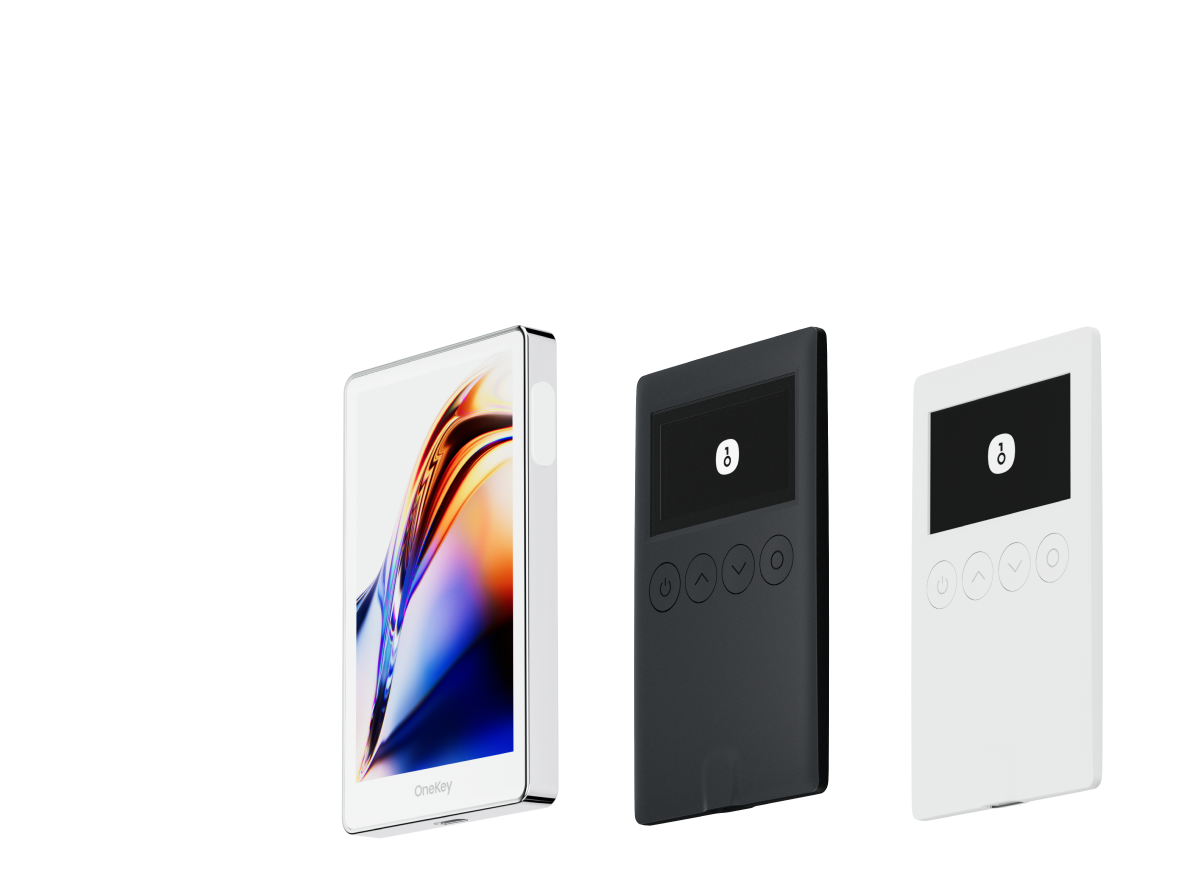
If you’re building or operating within an AI blockchain that uses NEUR, a hardware wallet can help isolate keys from everyday compute environments. OneKey offers open-source firmware, multi-chain support, and intuitive flows for staking and governance—practical features when agents and users frequently interact across EVM and Cosmos ecosystems. For developer teams, the ability to sign transactions securely while integrating with common tooling and standards reduces operational risk during deployments.
Final Thoughts
The NEUR token is more than a payment instrument. It is the incentive layer, reputation system, and decision-making engine that lets AI blockchains learn. By metering compute, rewarding useful work, enforcing verifiability, and enabling governance, NEUR becomes the brain that coordinates intelligence at internet scale.
For users and builders, the takeaway is simple: treat NEUR like critical infrastructure. Design for utility, verifiability, and cross-chain composability from day one. And keep private keys safe—because the future of AI on-chain will be secured, governed, and paid for by those who hold and use the brain of the network.
References and further reading:
- ERC-20 standard on ethereum.org (ERC-20 standard on ethereum.org)
- Bittensor technical docs (Bittensor technical docs)
- Chainlink Functions (Chainlink Functions)
- Chainlink CCIP (Chainlink CCIP)
- IPFS technical docs (IPFS technical docs)
- Filecoin documentation (Filecoin documentation)
- Arweave docs (Arweave docs)
- Ocean Protocol docs (Ocean Protocol docs)
- Akash documentation (Akash documentation)
- Ethereum zkSNARKs overview (Ethereum zkSNARKs overview)
- Cosmos IBC overview (Cosmos IBC overview)
- Ethereum EIP-6551 (Ethereum EIP-6551)
- SEC framework for digital assets (SEC framework for digital assets)
- EU MiCA regulation text (EU MiCA regulation text)
- Artificial Intelligence category overview (Artificial Intelligence category overview)