Hyperliquid Wallet Comparison: Complete 2026 Buyer's Guide
What you’re really choosing: custody, signing surface, and recovery
Before comparing wallet types, anchor on three practical questions:
- Who controls the keys? (you, a device you own, or an account managed via email login)
- Where do you sign? (browser extension, mobile deep link, hardware device, or smart account)
- How do you recover? (seed phrase, passkey / email flow, multisig, or “no recovery” risk)
For onboarding and expected flows (email login vs connecting a DeFi wallet, bridging USDC from Arbitrum, and “gas-less” enablement), see the official onboarding walkthrough: How to start trading.
What you will sign (and why it matters)
1) “Enable trading” signatures (often gas-less)
Many trading actions involve signatures that don’t look like a typical on-chain “send transaction” prompt. That’s great for UX, but it raises the bar for signature awareness—you should always understand what domain you’re connected to and what message you’re signing.
A lot of modern wallet prompts rely on typed structured data signing (EIP 712), which is designed to be safer and more human-readable than raw bytes. Reference: EIP 712 (Typed structured data hashing and signing).
2) Deposits/withdrawals and bridge-related signing
If you deposit USDC from Arbitrum, there are concrete “don’t mess this up” details (like minimums and supported assets). The canonical bridge flow and minimum deposit behavior are documented here: Bridge2 API docs (deposit/withdraw flow).
3) HyperEVM interactions (gas, network config, and “chain hygiene”)
If you interact with HyperEVM, you’ll be dealing with EVM-style gas and network configuration (including Chain ID and RPC endpoints). Practical setup is outlined here: How to use the HyperEVM.
The gas model references the EIP 1559 fee market (base fee + priority fee). Reference: EIP 1559.
Wallet options in 2026 (and what each is best at)
Option A: Email login (fastest onboarding, different trust assumptions)
What it is: You authenticate via email and a new address is created for you, lowering friction for first-time users.
Best for: First-time traders who prioritize speed and simplicity over full self-custody operational control.
Trade-offs:
- Recovery and access depend on your email security posture (SIM swap risk, inbox compromise, phishing).
- You still need to treat it like a real wallet: secure your email, use strong MFA, and separate devices if possible.
You can see the email login flow described in the official onboarding guide: How to start trading.
Option B: Standard self-custody EVM wallet (best balance for most users)
What it is: A regular EVM wallet (extension or mobile) where you hold the seed phrase.
Best for: Most active traders who want compatibility, control, and predictable recovery.
Trade-offs:
- Highest exposure to browser threats (malicious extensions, clipboard hijackers, phishing).
- If you sign the wrong approval/message, self-custody won’t save you.
Option C: Mobile wallet via WalletConnect (good UX, but verify what you connect to)
What it is: Use WalletConnect to approve sessions and sign from your phone while trading in a browser.
Best for: Users who want a clean separation between browsing and signing.
Trade-offs:
- Phishing has moved “up the stack”: attackers often clone frontends and trick users into approving sessions.
WalletConnect has been investing heavily in phishing resistance via domain verification. For context, see: WalletConnect Verify API overview.
If you want to understand how WalletConnect sessions request chains/methods/events (useful for “why is this app asking for so much?”), see: WalletConnect Namespaces spec.
Option D: Smart contract wallets / account abstraction (best for policy controls)
What it is: A smart account with programmable security (spending limits, session keys, recovery modules).
Best for: Power users who want policy-based safety—especially for HyperEVM activity where approvals and contract interactions stack up.
Trade-offs:
- Not all dapps handle every smart-account edge case smoothly.
- Misconfigured recovery modules can be a self-inflicted lockout.
Option E: Hardware wallet (best for key isolation; still requires good signing habits)
What it is: Private keys are generated and stored in a dedicated device; transactions are signed off-device.
Best for: Anyone holding meaningful funds or running a “vault + trading sub-account” model.
Trade-offs:
- Hardware protection reduces key-extraction risk, but it does not automatically protect you from signing a harmful approval.
A practical reminder from the security tooling world: approvals can drain funds without stealing keys—see the discussion on approvals and limitations here: Revoke.cash overview.
Quick comparison table (pick by goal, not by hype)
The 2026 threat model: what users worry about most (and what to do)
1) Fake frontends and session hijacking
- Bookmark the official app URL and avoid “search-engine roulette”.
- Prefer wallets that surface domain verification clearly. Background on domain verification: WalletConnect Verify API.
2) Dangerous approvals (the silent killer)
Approvals are a common pattern in DeFi—and also a common drain vector.
- Avoid unlimited allowances unless absolutely necessary.
- Revoke old approvals periodically.
Practical guides:
3) Bridge mistakes and wrong-asset deposits
Bridging is still where many irreversible errors happen (wrong token, wrong chain, below-minimum deposits).
For protocol-specific bridge behavior and minimums, reference: Bridge2 API docs.
For the common onboarding route, use the official Arbitrum bridge when appropriate: Arbitrum Bridge.
A note on “latest” ecosystem dynamics (why wallet choice matters more now)
Two trends make wallet decisions more consequential in 2026:
-
HyperEVM activity increases signature frequency (more contracts, more approvals, more “signTypedData” prompts). The official user guide highlights network setup and operational details: How to use the HyperEVM.
-
Token unlock schedules and transparency drive attention to operational security (more users watching wallets, transfers, and on-chain events). For example, reporting in late December 2025 noted ~1.2M tokens were unstaked ahead of a scheduled January 6, 2026 team distribution, with a stated monthly cadence: The Block coverage.
Recommended setups (realistic, battle-tested patterns)
Setup 1: “Fast trader, limited risk”
- Use a standard self-custody wallet for active trading
- Keep only the amount you’re willing to risk in the trading wallet
- Revoke approvals monthly and after any new dapp experiment
Setup 2: “Vault + trading wallet” (best overall for most serious users)
- Hardware wallet as the vault (long-term funds, minimal dapp exposure)
- Separate hot wallet for daily trading activity
- Transfer in/out as needed; keep the hot wallet intentionally small
Setup 3: “Policy-first” (advanced)
- Smart account on HyperEVM for controlled interactions (spending limits / session keys)
- Hardware wallet (or multisig) as the ultimate owner / recovery authority
Where OneKey fits (and when it’s worth it)
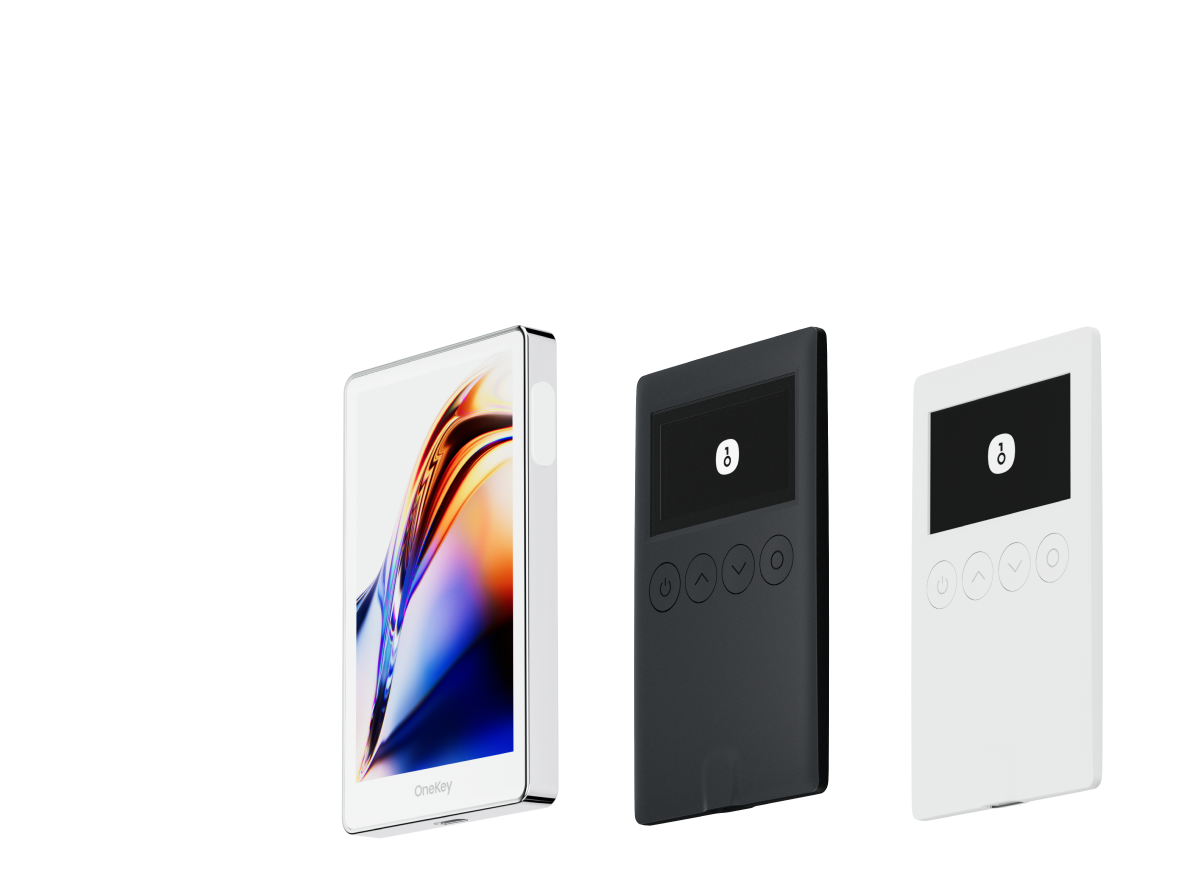
If you’re choosing a hardware wallet for the “vault + trading wallet” approach, OneKey is a strong fit when you want:
- Offline key isolation for long-term holdings (reduced key-extraction risk)
- A practical workflow for separating vault assets from active trading balances
- Compatibility with common dapp-connection flows (including WalletConnect-style usage, depending on your wallet stack)
The key takeaway: a hardware wallet is most valuable when it changes your behavior—keeping the vault cold, limiting approvals, and reducing browser exposure—rather than being used as a single “everything wallet” for constant dapp signing.