HOLD Token: The Ultimate HODL Test? Why HOLD Token Rewards Long-Term Investors


Key Takeaways
• HOLD Token incentivizes long-term holding through time-weighted rewards and governance privileges.
• The design aims to reduce volatility and align incentives among participants.
• Investors should consider the trade-offs, including liquidity risks and the complexity of the model.
The crypto market has always rewarded patience. From Bitcoin’s early “HODL” meme to today’s staking and governance models, long-term conviction has become a signal of alignment with a network’s future. A “HOLD Token” design takes that ethos seriously: it structurally rewards holders who commit capital and time, rather than speculators chasing short-term volatility. This article explores how a HOLD Token could work, why it benefits long-term investors, and what trade-offs to consider.
What is a HOLD Token?
“HOLD Token” is a term we’ll use to describe a token designed to incentivize long-term holding behavior. It blends proven mechanisms—like time-weighted locking, loyalty proofs, and governance alignment—to reward investors who stake, lock, or otherwise commit to the network over extended periods.
Key properties of a HOLD Token design:
- Time-weighted rewards: Longer lock commitments earn higher reward multipliers, inspired by the veTokenomics model popularized by DeFi protocols. For an accessible primer, see veTokenomics explained.
- Lockdrop or fair distribution: Tokens can be distributed via “lockdrops,” where users lock another asset to receive allocation, aligning initial participants with long-term value creation. For background, see lockdrops and vesting.
- Non-transferable positions as NFTs: Lock positions can be represented as non-transferable NFTs to prevent “hot potato” trading of locked rights, leveraging standards like ERC‑721 while the underlying token follows ERC‑20.
- Loyalty proofs: Projects may issue non-transferable “Proof of HODL” badges (similar in concept to soulbound tokens) to recognize milestone holding periods. For theoretical context, see Decentralized Society: Finding Web3’s Soul.
Why HOLD Token Rewards Long-Term Investors
- Time boosts compound alignment: The longer you lock or stake, the higher your reward multiplier. This discourages short-term churn and favors consistent participation over hype cycles. More on the model in veTokenomics explained.
- Emission pacing encourages patience: Emissions can be front‑loaded for early contributors and taper over time, or tailored to decrease volatility across market cycles. Careful tokenomics aim to reduce sell pressure during unlocks and create predictable incentives for holders. See vesting dynamics in token vesting and lockups.
- Governance privileges increase with commitment: Lock duration can amplify governance voting power, ensuring those with deeper conviction shape protocol direction—mirroring how foundational DeFi governance aligns incentives.
- Loyalty badges and access: Non-transferable proofs of long-term participation can gate premium features, higher yield tiers, or early access to new modules, encouraging holders to stay engaged.
Why This Matters in 2024–2025
Two macro dynamics reinforce long-term crypto participation:
- Staking and restaking: As Ethereum matured post-merge, staking and “restaking” (delegating security to additional services) emerged as core yield strategies. Check the fundamentals on Ethereum staking and restaking’s risk framework in EigenLayer docs.
- Institutional flows: Managed fund inflows and outflows have become significant price drivers, rewarding disciplined portfolio construction over impulsive trading. Weekly trends are tracked by research desks such as CoinShares Digital Asset Fund Flows.
A HOLD Token aims to harness these realities by structurally privileging capital that supports the network across multiple market regimes.
How a HOLD Token Might Work (Technical Overview)
- Base token standard: ERC‑20 for transferability and integration with wallets, exchanges, and on-chain tooling. See ERC‑20.
- Lock mechanism: Users lock tokens for a chosen duration (e.g., 1–48 months) receiving a time-weighted “HOLD score.” Lock positions can be tokenized as non-transferable NFTs to prevent secondary markets for locked rights; more on ERC‑721.
- Reward engine: A contract distributes rewards based on HOLD score, with multipliers that reflect how long tokens are locked and whether users maintain or extend their positions.
- Governance amplifier: Voting power scales with lock duration to align decision-making with long-term contributors.
- Loyalty proofs: Holders receive non-transferable badges after reaching thresholds (e.g., 6 months, 1 year), which can unlock perks or boost rewards—conceptually akin to [soulbound] credentials in Decentralized Society: Finding Web3’s Soul.
Benefits vs. Trade-Offs
Benefits:
- Stronger holder alignment and reduced mercenary behavior
- Predictable emissions and reduced unlock-driven volatility
- Clear incentives for governance participation
Trade-offs:
- Liquidity and opportunity cost: Locked capital cannot be redeployed quickly in fast-moving markets.
- Smart contract risk: Locking requires trusting protocol contracts; thorough audits and ongoing monitoring are essential. Review common risks in Ethereum smart contract security.
- Complexity: Time-weighted models can be harder for new users to understand; UX and transparent docs are critical.
Best Practices for Participating
- Do your homework: Read tokenomics, audits, and governance docs. Validate reward formulas and lock parameters before committing funds.
- Start small: Test flows with limited amounts, then scale as you build confidence.
- Monitor unlock schedules: Stay aware of upcoming cliffs and emissions to anticipate market behavior. Learn the basics in token vesting and lockups.
- Secure self-custody: Long-term holding relies on robust private key management and cold storage.
HODL Culture Meets Mechanism Design
“HODL” began as a misspelling; it evolved into a community belief in long-term conviction amid volatility. For background, see HODL meaning. A HOLD Token formalizes that culture with code: the longer you commit, the more you’re rewarded, and the more influence you have in governance. It’s the ultimate HODL test—not by virtue of memes, but by incentive design.
Where OneKey Fits In
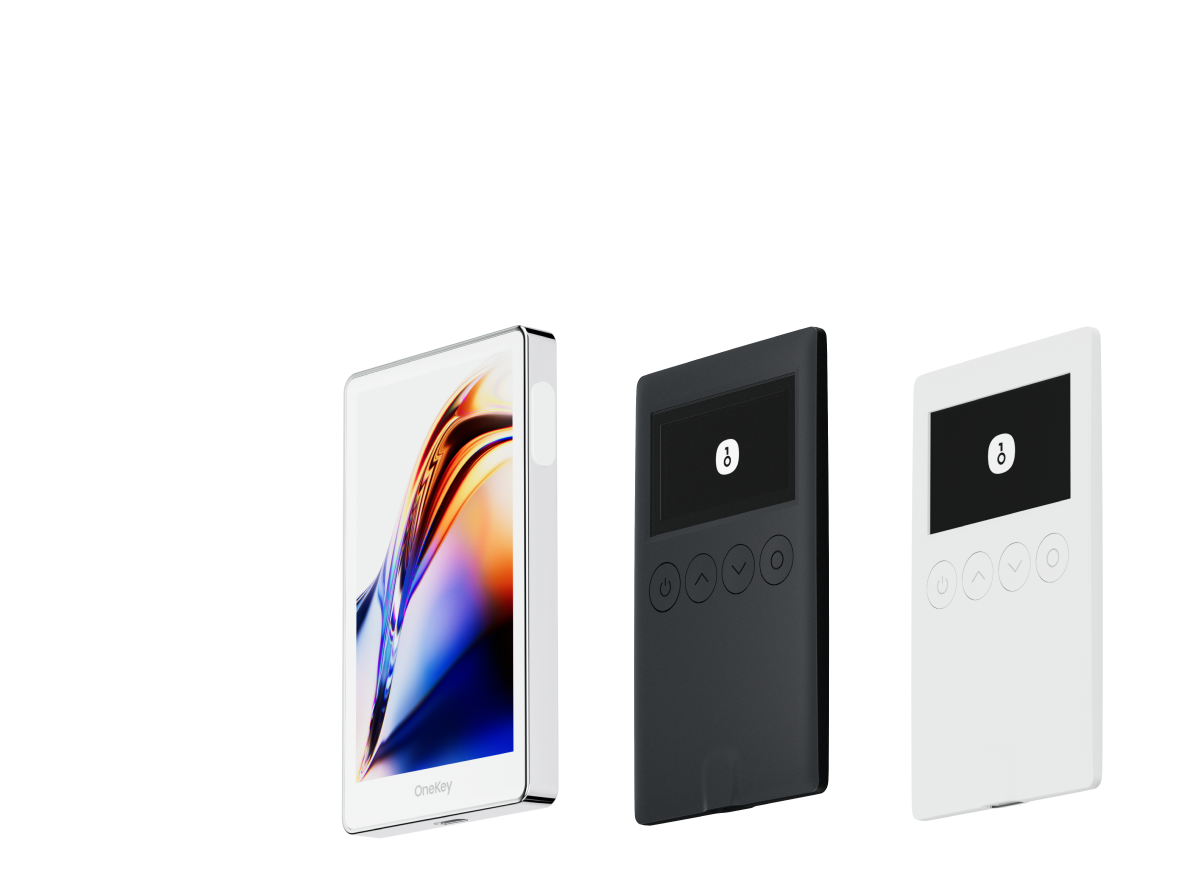
If you decide to participate in a HOLD Token or similar long-term staking and locking strategy, secure storage matters. OneKey offers:
- Air‑gapped cold storage for long-term custody
- Open-source software and multi‑chain support for EVM chains and L2s used by many DeFi protocols
- Clear signing flows for ERC‑20 transfers and contract interactions
A hardware wallet helps remove endpoint risk while you focus on the strategy’s economics. For a token model that rewards time, keeping keys offline with a reliable device is an obvious complement.
Final Thoughts
HOLD Token-style designs prioritize time preference over hype. They’re not for everyone, and they introduce real trade-offs—but for investors who believe in a network’s long-term trajectory, they create a tangible, measurable link between patience and reward. As staking, restaking, and governance mature in 2024–2025, expect more protocols to adopt mechanisms that explicitly honor holding—and more investors to seek tools and custody practices that make long-term commitment safer and simpler.
This article is for educational purposes only and is not financial advice. Always research the specific protocol, contract code, and legal considerations before participating.