DUPE Token: A Copycat Coin or a Clever Play? DUPE Token Explained


Key Takeaways
• DUPE tokens can be either lazy copies or self-aware memes.
• A thorough verification process is essential to avoid scams.
• Market context and social signals are crucial for assessing the viability of a DUPE token.
If you’ve spent time on Crypto Twitter and DEX trackers lately, you’ve probably seen tickers like DUPE ripping across charts. Some “dupe” tokens are shameless copies of trending coins; others try to spin the culture of imitation into a meta-joke with marginal utility. This piece breaks down what a DUPE token could be, how to tell copycat from clever, and the concrete steps to assess risk before you trade — without getting rugged.
To ground the discussion in 2025 market reality: on-chain speculation remains hot, with DEX activity still capturing outsized retail attention and new meme narratives spawning daily. You can monitor aggregate flows via DeFiLlama’s DEX volume dashboard to understand when risk appetite is peaking, which often correlates with rapid memecoin proliferation (including copycats) at market extremes. See DeFi metrics here: DeFiLlama’s DEX volumes.
What is a DUPE token?
“DUPE” commonly refers to:
- A copycat coin that clones the name, ticker, branding, or tokenomics of a successful project to harvest attention.
- A meta-memecoin openly riffing on the idea of duplication (“we’re a dupe, and that’s the point”), sometimes adding gamified mechanics or community challenges to justify its narrative.
Memecoins thrive on attention, timing, and distribution — not necessarily on deep utility. For context on how this niche evolved, see CoinDesk’s explainer on meme coins: What are memecoins? (CoinDesk Learn).
Why do copycat coins keep returning?
- Low deployment cost and instant distribution on DEXs
- Viral loops on social platforms and bots
- Asymmetric payoffs lure early “apes,” especially when on-chain volumes are strong
- FOMO and short market memory make rebranded clones viable
The playbook is simple: launch quickly, seed liquidity, go viral, exit — or, for better-intentioned teams, try to sustain with progressive utility. The problem is that both good-faith experiments and malicious dupes look identical at Genesis. Your protection is process.
How to verify any “DUPE” before you touch it
The following checklist applies broadly to Ethereum and Solana, which remain the biggest memecoin arenas.
- Find the canonical contract
- Never trust tickers alone. Use the project’s official website/X handle only after you validate provenance (domain age via the Internet Archive, and social verification).
- Ethereum: use Etherscan to search the contract. Confirm it’s verified and avoid same-name impostors. Etherscan.
- Solana: use Solscan to find the mint and token accounts. Look for verified metadata. Solscan.
- Ownership and upgradability
- Ethereum: is the contract Ownable? Is it a proxy that can be upgraded? Review “Read Contract” and “Contract Creator” on Etherscan; if using proxies, understand the admin flow (OpenZeppelin on proxies).
- Solana: check if Mint Authority and Freeze Authority are renounced (set to null). Tokens with active authorities can change supply or freeze accounts unexpectedly. Solscan.
- Supply and distribution
- Check max supply, initial distribution, and top holders. If a handful of wallets control a large percentage, exit liquidity risk is high. Etherscan’s “Holders” tab and similar views on Solscan help.
- Liquidity and trading constraints
- Verify where liquidity sits (e.g., Uniswap/Sushi/Raydium pools) and how large the pool is relative to fully diluted value.
- Confirm whether trading taxes, blacklists, or max transaction sizes exist. You can scan for common hazards with tools like Honeypot.is and GoPlus token security (Honeypot.is; GoPlus Labs).
- Code and behavior signals
- Verified source code and straightforward ERC-20/SPL patterns are preferable.
- If the contract is upgradeable or owner-controlled, look for multi-sig custody of admin keys (Safe is the standard for Ethereum). Safe.
- Social and provenance
- Cross-check the domain history (Internet Archive) and handle authenticity. Beware sudden handle rebrands and bot-driven follower spikes. Internet Archive.
- Market context and flows
- High system-wide DEX volumes often coincide with a rush of copycats. Monitor the backdrop so you’re not the last buyer in an overheated pocket. DeFiLlama’s DEX volumes.
- Legal and fraud awareness
- Copycat coins frequently vector into “rug pulls,” wash trading, and spoofed liquidity. Chainalysis’ research on crypto crime provides ongoing context for these patterns. Chainalysis blog.
Red flags often found in DUPE-style copycats
- Trading “works” but sells revert or are heavily taxed
- Mint or freeze authority still active (Solana)
- Owner can alter fees, blocklists, or liquidity parameters at will
- Top 5 wallets hold outsized allocations
- Liquidity is tiny, unlocked, or migratable via owner-only functions
- Socials are fresh, derivative, and telegram-only with no credible signer presence
- Reused websites, plagiarized whitepapers, or near-identical bytecode with malicious edits
When a DUPE might be a clever play
A few projects embrace the duplication meme with transparency:
- Fair launch, renounced authority, and clear, fixed supply
- Locked liquidity with public proofs and sensible pool depth
- Clean, verified code without hidden fee switches
- On-chain games or burn/mint mechanics that are measurable and open-source
- Community-led multi-sig for any treasury or upgrade path
Even then, remember: narrative coins live or die by ongoing attention. Evaluate whether the community and liquidity can sustain beyond week one.
Practical flow: assess before you buy
- Step 1: Locate the real contract or mint (Etherscan; Solscan).
- Step 2: Scan taxes, blacklist, and honeypot behavior (Honeypot.is; GoPlus Labs).
- Step 3: Check ownership, proxies, and authorities (OpenZeppelin on proxies; Solscan authorities view).
- Step 4: Inspect top holders and pooled liquidity depth (Etherscan “Holders,” DEX pool pages, Uniswap Docs).
- Step 5: Validate socials, domain history, and any claimed audits (Internet Archive; project GitHub if referenced).
- Step 6: Size your position assuming worst-case slippage and illiquidity; don’t hold bags you can’t exit.
Uniswap documentation is helpful if you’re reviewing pool mechanics and LP dynamics: Uniswap Docs.
Security hygiene for speculative tokens
- Use a fresh wallet for degen activity and revoke spend allowances regularly.
- Prefer clear-signing wallets that show exact function calls and spend approvals.
- Keep long-term holdings segregated from hot experimentation wallets.
- Re-verify contract addresses every time; malicious ad placements commonly spoof lookups.
Storing memecoins safely with OneKey
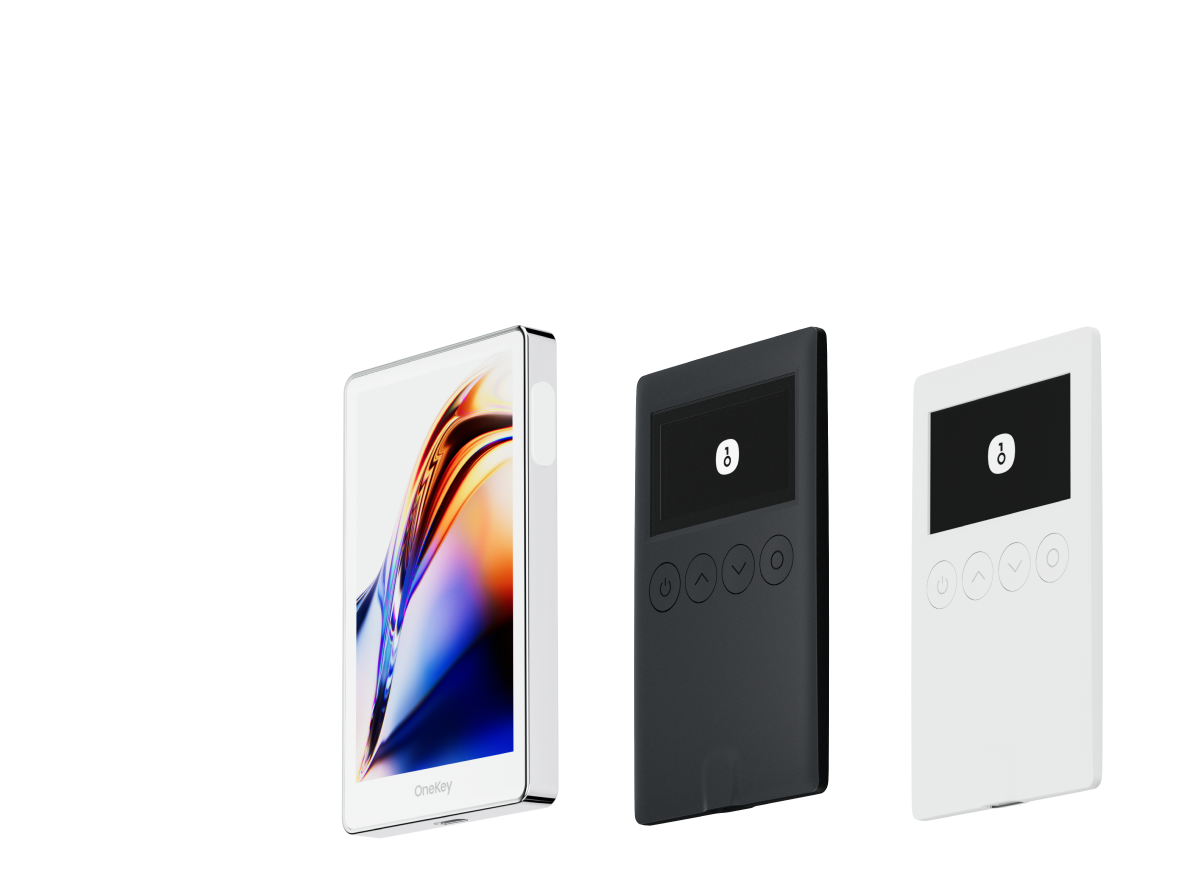
If you do decide to hold a DUPE token longer than a few minutes, consider moving assets you intend to keep into a hardware-secured setup. OneKey offers:
- Clear-signing for contract interactions so you can see methods, spend limits, and token approvals before you confirm
- Open-source firmware and transparent development, aiding independent review
- Multi-chain support for major EVM networks and Solana, reducing operational friction when you rotate positions on-chain
- Integration with the OneKey App for watch-only addresses and fine-grained approval management
This won’t make a bad token good — but it can reduce key theft and approval mishaps while you navigate high-risk markets.
Bottom line
“DUPE” can be either a lazy copycat or a self-aware meta-meme. The difference is not the name — it’s the contract, ownership, liquidity, and behavior on-chain. In a cycle where duplication is itself a narrative, your edge is disciplined verification and tight risk limits. Use block explorers, security scanners, and volume dashboards to spot structural risks. When in doubt, skip it. There will always be another coin tomorrow.
References and tools:
- What are memecoins? (CoinDesk Learn)
- DeFiLlama’s DEX volumes (DeFiLlama)
- Etherscan block explorer (Etherscan)
- Solscan block explorer (Solscan)
- OpenZeppelin on proxies and upgradeability (OpenZeppelin)
- Honeypot checker (Honeypot.is)
- GoPlus token security (GoPlus Labs)
- Uniswap documentation (Uniswap Docs)
- Multi-sig standard for admin keys (Safe)
- Crypto crime research and trends (Chainalysis blog)