B Token Explained: Simplicity and Strength in One Letter

Key Takeaways
• A one-letter token enhances memorability and clarity across crypto ecosystems.
• Adhering to ERC-20 standards ensures broad compatibility and user-friendly interactions.
• Clear utility and transparent distribution mechanics are essential for building trust.
• Compliance with regulations like EU MiCA is crucial for long-term success.
• Security measures, including audits and user education, are vital for protecting assets.
A single letter can carry a lot of weight. In crypto, where ticker symbols and token names often compete for attention, a “B Token” is an exercise in clarity: one letter, one idea, one promise. Whether you’re designing a new asset, migrating a brand, or rethinking token utility, this primer explains how a minimal identity can translate into robust on-chain functionality—without sacrificing compliance, security, or user experience.
Why a One-Letter Token?
- Memorability: One-letter tickers cut through noise and reduce cognitive load for users discovering new assets across wallets, DEXs, and explorers.
- Cross-ecosystem clarity: A compact symbol that maps cleanly to utility makes integrations and listings more straightforward.
- Brand discipline: Minimalism forces teams to express utility, governance, and economics with discipline and transparency.
A “B Token” can exist as an ERC-20 on Ethereum or an L2, a native asset on a specific chain, or a wrapped representation across multiple networks. From a product standpoint, its power lies in pairing simple identity with well-defined utility and resilient token mechanics.
Technical Foundations: Keep It Familiar, Make It Strong
For fungible assets, ERC-20 remains the gold standard for broad compatibility, tooling, and integrations. Anchor your design in familiar components, then add upgrades where it truly improves UX.
- ERC-20 baseline: Ensure alignment with the widely adopted ERC‑20 token standard.
- Gasless approvals: Adopt EIP‑2612 “permit” to reduce friction for DEX swaps and DeFi interactions.
- Safer signing: Use EIP‑712 typed data for human-readable signatures and wallet clarity.
- Avoid upgrade complexity unless necessary: If you employ proxies for upgradability, document governance controls and timelocks transparently. Production teams typically rely on audited implementations like OpenZeppelin Contracts to reduce attack surface.
On Bitcoin, a “B Token” concept would require different primitives (UTXO-based issuance or off-chain representations). If your vision includes cross-chain assets, treat bridges as critical infrastructure—design controls for mint/burn reconciliation and counterparty risk, and monitor L2 security with resources like L2Beat.
Utility That Earns Its Letter
A minimal brand demands clear utility. Consider designing the “B Token” around applications users already understand and value:
- Governance: Voting on parameter changes, treasury allocation, and upgrade paths. Typed-data signatures improve safety for off-chain vote collection.
- Liquidity incentives: Bootstrap DEX pools and reward long-term participation. Review AMM mechanics and impermanent loss via Uniswap Docs.
- Payments and access: Enable fee discounts, premium features, or allowlist access anchored by on-chain proofs.
- Network choice: Mainnet for credibility and composability; L2s (e.g., Base, Optimism, Arbitrum) for lower fees and faster finality. Check Base Docs for deployment patterns and bridge considerations.
- Gas and cost awareness: Track live network fees with tools like the Etherscan Gas Tracker to plan launches and user campaigns.
Distribution: Fair, Transparent, Verifiable
Simplicity in symbol must be mirrored by simplicity in distribution mechanics. Users increasingly expect fair launch principles and clear supply schedules.
- Fixed vs. elastic supply: A capped supply builds scarcity; a dynamic supply requires robust governance to maintain trust.
- Vesting and cliffs: Enforce linear vesting for team and investor allocations on-chain and disclose schedules clearly.
- Public launch: Document mint logic, allocation, and any pre-mine or retroactive drops. Consider verifiable merkle claims and open-source claim contracts.
When pursuing listings, adhere to public criteria and ensure symbol uniqueness across venues. For example, review CoinMarketCap listing guidance and CoinGecko listing criteria.
Compliance: Minimal Brand, Maximal Clarity
In 2025, compliance considerations matter more than ever. Beyond technical rigor, clear disclosures help your “B Token” avoid regulatory headaches.
- EU MiCA: If operating or marketing in the EU, review scope and obligations under the Markets in Crypto-Assets Regulation (MiCA) using the official text on EUR‑Lex.
- Sanctions and AML: Maintain policies for sanctions screening and address high-risk flows. See guidance from OFAC and virtual asset recommendations by the FATF.
- Marketing disclosures: Align token communications with securities guidance in your jurisdictions, and review the U.S. SEC’s investor resources on crypto offerings via the SEC’s investor bulletin.
Simplicity in narrative reduces legal ambiguity: be explicit about what the token does—and what it doesn’t.
2025 Landscape: L2s, Account Abstraction, and UX
User experience continues to improve across the stack. To future-proof a “B Token,” plan for trends shaping 2025:
- L2 consolidation: Capital flows concentrate on high-throughput L2s with robust security models. Track maturity and risk metrics via L2Beat.
- Account abstraction: Wallet UX benefits from programmable accounts and gas sponsorship. Explore EIP‑4337 for paymasters and bundlers.
- Standardization: ERC-20 remains foundational; extensions like EIP‑2612 and ERC-712 enhance safety and efficiency without sacrificing compatibility.
A minimal ticker fits a world where UX is everything—and technical guardrails are non-negotiable.
Security: From Smart Contracts to Personal Keys
Security is a journey that spans code, operations, and user habits:
- Audits and testing: Use formal audits and fuzz testing for mint/burn, vesting, and governance modules. Follow secure coding guidance and widely used libraries like OpenZeppelin.
- Operational controls: Implement multisig with timelocks, publish emergency procedures, and avoid privileged roles without strict transparency.
- User protection: Encourage non-custodial storage and safe signing flows (EIP‑712). Hardware wallets add a critical layer of defense against malware and phishing.
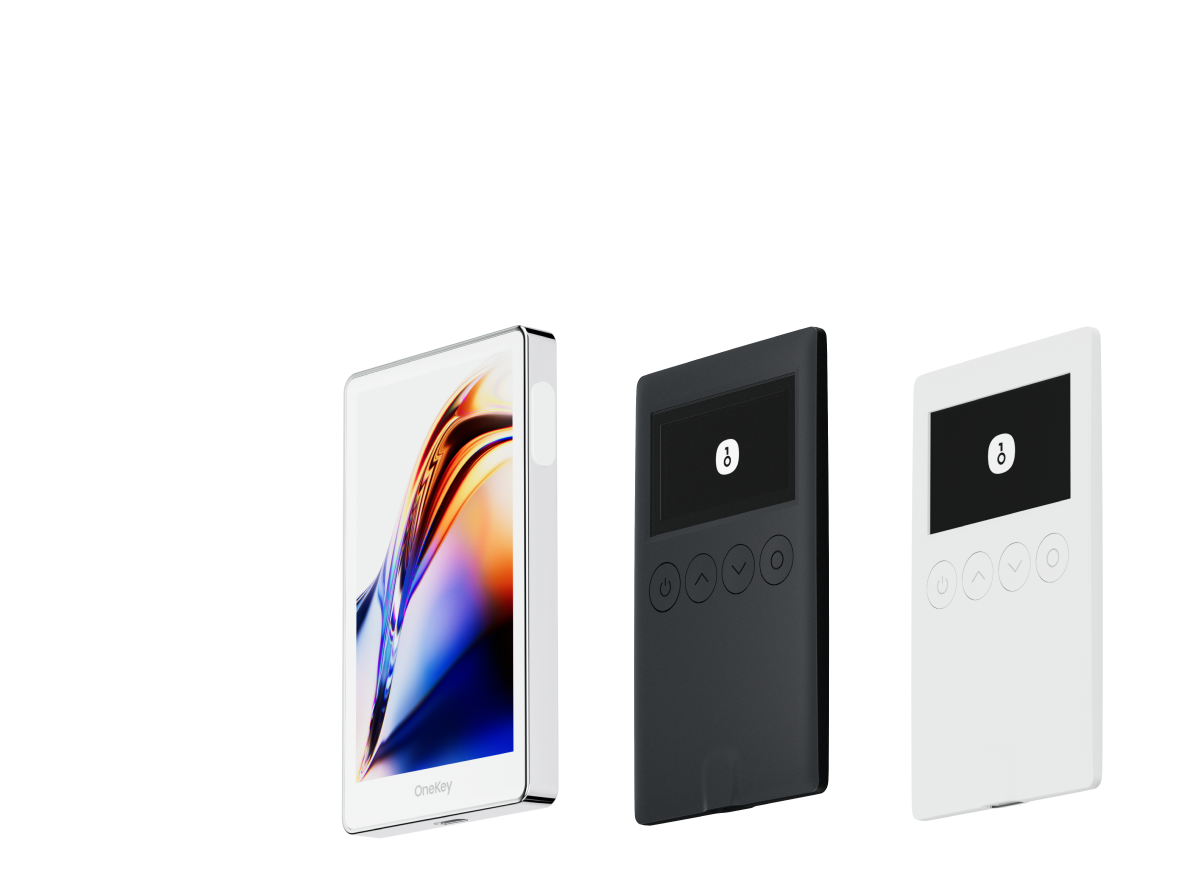
For holders, a concise ticker and a disciplined security posture go hand-in-hand. If your “B Token” is deployed across Ethereum and major L2s, OneKey’s hardware wallet can help users store assets offline, verify transactions on a secure screen, and leverage open-source firmware for transparency. OneKey’s multi-chain support, passphrase options, and emphasis on human-readable signing align well with tokens that rely on ERC‑20, EIP‑2612, and EIP‑712—especially when governance or high-value swaps are part of the utility.
Launch Checklist for a One-Letter Token
- Finalize tokenomics: supply, vesting, emissions, and treasury governance
- Implement ERC‑20 + EIP‑2612 + EIP‑712 for better UX and safer signing
- Audit contracts; publish reports and risk disclosures
- Choose deployment network(s): mainnet and/or L2s; document bridge policies
- Set up liquidity and market-making; define LP incentives and risks
- Prepare compliance docs; align with MiCA, AML, and sanctions controls
- Coordinate listings and ensure symbol uniqueness; provide public metadata
- Educate users on secure storage and signing; recommend hardware wallets for high-value holdings
Conclusion: One Letter, Many Commitments
A “B Token” is more than a minimalist brand—it’s a commitment to clarity and strength in every layer of the stack. Pair a simple identity with transparent utility, audited code, thoughtful distribution, and compliance discipline. Make UX native, security routine, and governance predictable.
And when it comes to self-custody, consider equipping your community with hardware wallets that reinforce the same values. OneKey’s open-source approach, secure element, multi-chain support, and focus on safe signing flows complement the practical design of a modern ERC‑20—helping your single-letter token stand for strength long after launch.