AVI Token: The Profile Picture Coin? AVI Token’s Link to Digital Identity


Key Takeaways
• AVI Token could serve as a bridge between social avatars and on-chain membership.
• The integration of identity standards and privacy measures is crucial for AVI's success.
• Risks such as privacy leakage and platform dependence must be carefully managed.
Crypto culture has always loved avatars. On X and Farcaster, your “avi” — the profile picture — is a public signal of identity, reputation, and tribe. That makes “AVI Token,” a proposed “profile picture coin,” an intriguing idea: can a token capture the value of our social identities, turning PFPs into portable, onchain primitives? More importantly, can AVI Token responsibly bind social capital to cryptographic ownership without sacrificing privacy or security?
This article explores how a profile-picture coin could work, the identity tech it would rely on, the risks, and what self-custody best practices matter if AVI aims to sit at the intersection of social and finance.
Why a “Profile Picture Coin” Now?
Two tailwinds make a PFP-linked token plausible:
- Social graphs are moving onchain. Protocols like Farcaster and Lens Protocol anchor identities to wallets and composable social data. Farcaster’s app ecosystem (including interactive “Frames”) shows how identity, content, and tokens can interact in a single UX, tightening the loop between social clout and financial primitives. See Farcaster’s overview of Frames.
- NFTs and identity standards have matured. ENS, DIDs, VCs, ERC‑4337, and ERC‑6551 lowered the friction for representing identity onchain. These primitives jointly enable “your PFP is your identity” and “your identity owns things,” with strong cryptographic guarantees. Explore ENS and the W3C’s Decentralized Identifiers (DIDs) and Verifiable Credentials to see the foundations.
If AVI Token emerges as “the profile picture coin,” it would likely position itself as a bridge between social avatars and onchain membership, access, or status.
What Could AVI Token Be?
Think of AVI Token as a social identity layer with tokenized utility. Possible designs include:
- PFP-linked membership: Holding AVI could grant features for PFP NFT holders, such as gated chats, curation rights, or distribution of creator rewards.
- Identity staking: Users “stake” AVI to a profile (ENS name or Farcaster/Lens ID) to boost reputation scores or earn social rewards, subject to sybil-resistance rules.
- PFP custody and control: An identity account controls its PFP, assets, and permissions — with AVI acting as a governance or utility token for that account ecosystem.
There’s no single correct architecture. But a credible profile picture coin will need to integrate with existing identity standards and social protocols instead of reinventing the wheel.
The Identity Tech AVI Would Need
- Token-bound PFP accounts. With ERC‑6551 token-bound accounts, each NFT (e.g., your PFP) can own assets and operate as a smart account. AVI could bind utility to those accounts and enable PFPs to directly hold, spend, or vote.
- Wallet-centric identity. With EIP‑4337 account abstraction, identities become programmable, enabling gas sponsorship, session keys, and safer UX for social actions. Discussion around EIP‑7702 further explores how EOAs can delegate smart-account capabilities while preserving familiar ownership models.
- Verifiable claims. The W3C DID Core standard and Verifiable Credentials can anchor proofs like “this X handle maps to this address” or “this person owns that PFP,” without revealing more than necessary. AVI could use VCs to tie Web2 handles to wallets in a privacy-preserving way.
- Sign-in and social linking. Sign-In with Ethereum (EIP‑4361) is a battle-tested method for linking offchain profiles to onchain addresses via signed statements. AVI could make SIWE mandatory for identity binding.
- Onchain social graphs. Farcaster and Lens Protocol provide identity registries and composability. AVI could be integrated as a “social utility token” for profiles, feeds, and communities anchored to these networks.
- Privacy and proofs. If AVI incorporates sensitive identity attributes, zero-knowledge techniques can help minimize data exposure while proving membership or reputation. See the overview of zero-knowledge proofs.
Why Bind Tokens to Avatars?
- Reputation portability. Social capital is often platform-siloed. AVI could help port reputation across apps by anchoring it to your wallet-bound identity.
- Community governance. A PFP coin can power curation, moderation, and rewards aligned to a community’s norms.
- Access and monetization. Token-gated content, collab filters, and creator rewards can become programmable and composable — especially if integrated with token-bound accounts.
The Big Risks
- Privacy leakage. Binding tokens to public profiles can unintentionally dox users. Use VCs and selective disclosure to prove what’s needed, and nothing more. See Verifiable Credentials.
- Sybil resistance. Reputation systems are vulnerable to fake identities and “farmed” accounts. AVI should avoid shallow metrics and implement multi-layer sybil defense (DIDs, proofs, and social graph heuristics).
- Platform dependence. If AVI relies too much on a single social protocol (or Web2 platform), it reintroduces a central choke point.
- Speculation vs. utility. As with many tokens, price can overshadow utility. A credible profile picture coin must deliver sustained, non-price utility to avoid boom-bust cycles commonly observed in meme-centric assets. For context, see industry coverage of social-token dynamics via CoinDesk Markets.
- Compliance and consumer protection. Identity-linked tokens may implicate data protection and financial regulations in some jurisdictions. Projects should seek legal guidance early.
Practical Architecture for AVI
A pragmatic blueprint might look like this:
- Identity registry: Choose a base identity primitive (ENS or DID document) for each profile. Reference: ENS and W3C DID Core.
- Profile binding: Use EIP‑4361 (SIWE) to bind social handles, and issue a Verifiable Credential to the wallet.
- PFP custody: Implement ERC‑6551 so the PFP NFT becomes an account that can hold AVI and other assets.
- Smart permissions: Leverage EIP‑4337 account abstraction for sponsored actions, session keys, and smoother UX.
- Social graph integration: Offer opt-in connectors to Farcaster and Lens Protocol, enabling token-gated features and community governance.
- Privacy layers: Use zero-knowledge techniques to keep private data offchain and prove only necessary facts. Primer: Zero-knowledge proofs.
Security and Self-Custody: Don’t Let Your Avatar Get Rugged
If your PFP and identity are tied to tokens and permissions:
- Use hardware wallets for key management. Your keys guard not only funds but your identity, profile bindings, and potential VC attestations.
- Separate “public social” keys from “cold” treasury keys. Account abstraction can help create scoped session keys for everyday social actions, reducing exposure of long-term keys.
- Enable passphrases and multi-sig or social recovery where feasible. These features reduce loss risk without sacrificing non-custodial control.
- Verify every signature, especially SIWE prompts and permissions for token-bound accounts.
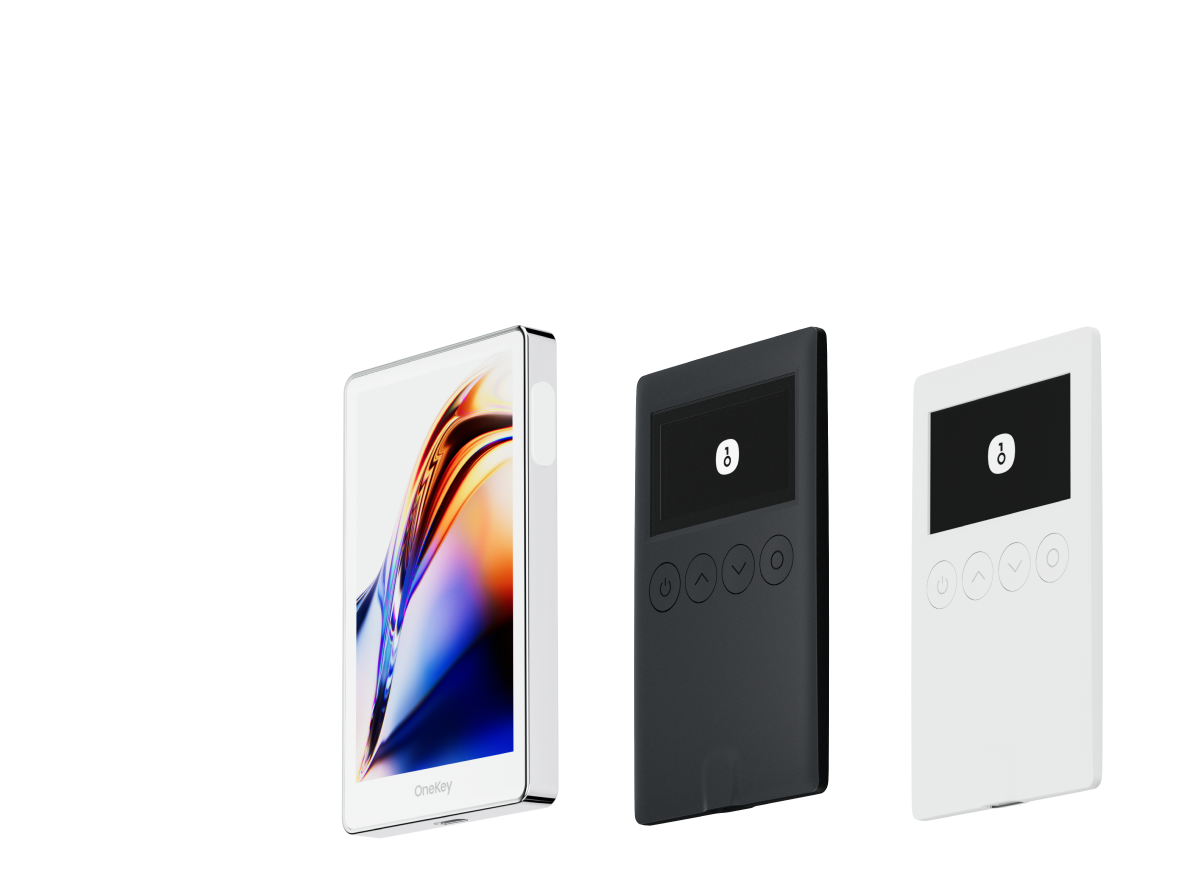
For users who want open-source, multi-chain security and smooth signing UX for identity workflows, OneKey hardware wallets provide air‑gapped protection, transparent firmware, and broad EVM and non‑EVM support — a strong foundation if AVI ties your social profile to onchain assets while relying on standards like SIWE, ENS, and token-bound accounts.
What Would Success Look Like?
AVI Token will be more than a meme if it:
- Integrates with identity standards (DID, VC, SIWE)
- Uses token-bound accounts for PFP custody
- Delivers actual utility: access, curation, and rewards beyond price
- Protects privacy with selective disclosure and ZK proofs
- Builds across multiple social protocols to avoid central choke points
- Embraces secure self-custody and auditable, open integrations
If the “profile picture coin” becomes a reality, it should amplify the best parts of crypto-native identity: self-sovereignty, portability, and composability — without turning our social lives into doxxing vectors or hollow speculation engines.
Final Thoughts
Tying tokens to avatars is a powerful idea because identity is the multiplex of crypto: value, reputation, and community converge in a single profile. The standards and protocols to make AVI credible already exist. The hard part is balancing utility, privacy, and governance. If you’re experimenting at this frontier, secure your identity keys with a hardware wallet, consider identity-specific key hygiene, and look for projects that build on open, verifiable standards.
When your PFP controls assets and membership via ERC‑6551 and you sign into apps via SIWE, the wallet that protects those keys becomes your identity guardian. That’s where a device like OneKey can be a practical choice: audited, open, and designed to keep your social and financial life safe as identity goes onchain.